
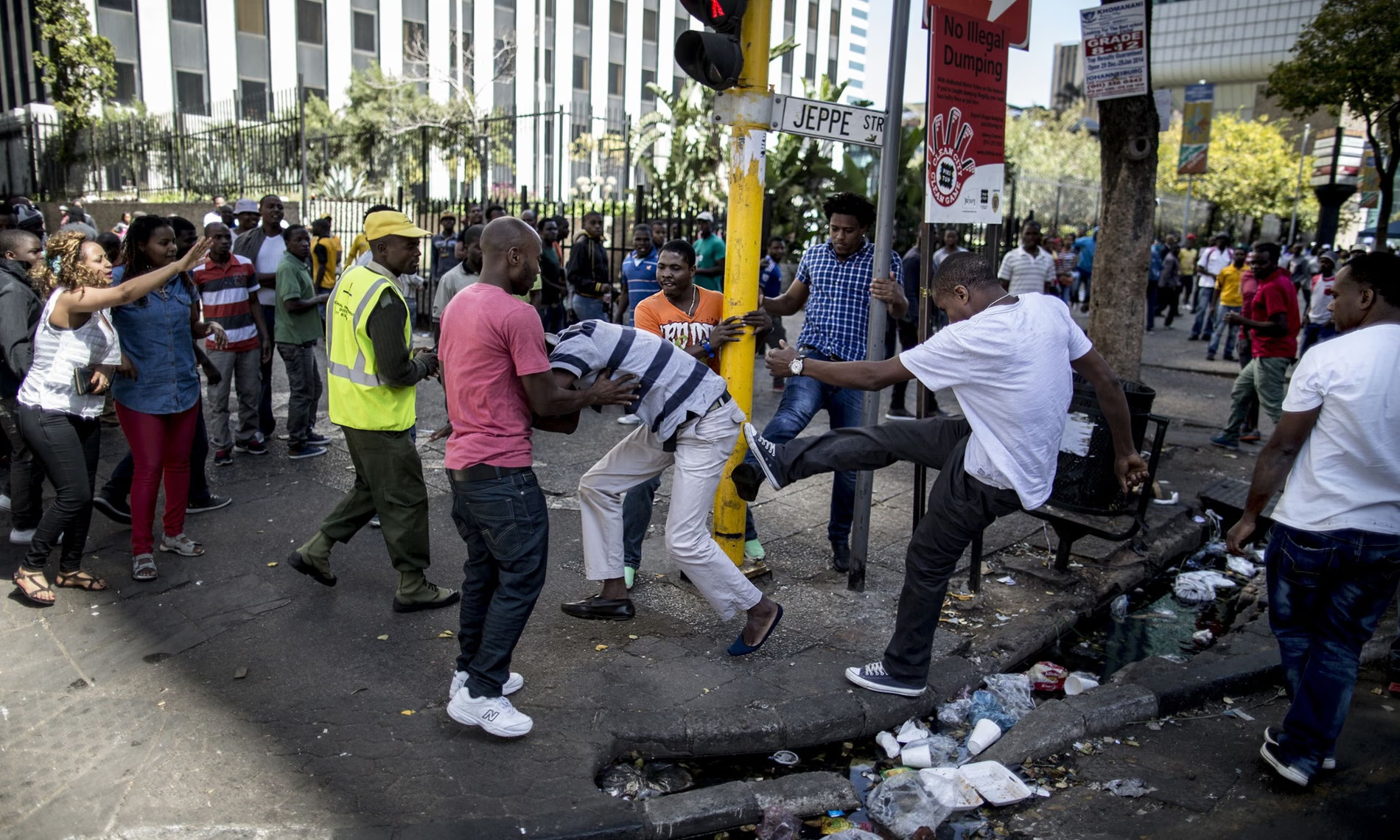
Tensions over immigration surged in Johannesburg on Wednesday as hundreds of protesters took to the streets, forcing several businesses to shut down and reigniting national debate over undocumented migration. The demonstration highlighted growing frustration among some South Africans over economic hardship, unemployment, and crime, which protest groups link to illegal immigration.
The march, organised by the anti-illegal-immigration group March and March, drew support from multiple political and civic movements, including Operation Dudula, ActionSA, the Inkatha Freedom Party, and the uMkhonto weSizwe Party. The turnout reflected a growing coalition of voices calling for stricter immigration enforcement across the country.
Protesters initially gathered at Mary Fitzgerald Square in the Newtown district before marching under heavy police presence to the Gauteng Provincial Legislature. There, they submitted a memorandum demanding tighter border controls, stricter visa regulations, and the deportation of undocumented migrants.
As the march moved through the Central Business District, tensions escalated. Reports indicated that some demonstrators pressured foreign-owned shops to close, leading to widespread shutdowns as business owners feared possible violence or intimidation. While no large-scale clashes were immediately confirmed, the situation raised concerns about safety and the potential for xenophobic incidents.
Addressing the crowd, March and March leader Jacinta Ngobese Zuma called for decisive government action, insisting that all undocumented migrants should be deported and immigration systems strengthened. She also accused corrupt officials within law enforcement of enabling illegal migration, urging authorities to hold complicit officers accountable.
Echoing similar sentiments, Herman Mashaba, leader of ActionSA, criticised the government for what he described as years of inaction on border control and immigration enforcement. He warned that continued delays in addressing these concerns could deepen public anger and insecurity.
The protesters’ demands included stricter asylum policies, sanctions against businesses employing undocumented migrants, and limits on access to public services for those without legal status. These calls reflect a broader shift in public discourse, where immigration is increasingly linked to socio-economic challenges.
Gauteng Premier Panyaza Lesufi received the memorandum and promised a formal government response within seven days. However, his brief appearance was met with boos from sections of the crowd, underscoring the level of dissatisfaction among demonstrators.
The Johannesburg protest is part of a wider pattern of anti-immigration demonstrations across South Africa, with similar actions reported in KwaZulu-Natal and the Eastern Cape. This growing wave of protests is increasing pressure on the national government to tighten migration policies and improve border management.
In response, government spokesperson William Baloyi said authorities are stepping up efforts to address illegal immigration. Measures include enhanced border security, the rollout of an Electronic Travel Authorisation system, and upgrades at key entry points such as Lebombo and Beitbridge. Deportations have also increased significantly, with around 500,000 undocumented migrants removed from the country since April 2023.
Despite these measures, national leaders have urged caution against rising anti-foreigner sentiment. President Cyril Ramaphosa recently warned against xenophobia, reminding citizens of the support South Africa received from other African nations during its struggle for freedom. His message highlights the delicate balance the country faces between enforcing immigration laws and maintaining social cohesion.
As economic pressures persist, immigration is likely to remain a deeply sensitive issue in South Africa. The Johannesburg protest underscores the urgency for policies that address public concerns while safeguarding human rights and preventing divisions within society.