
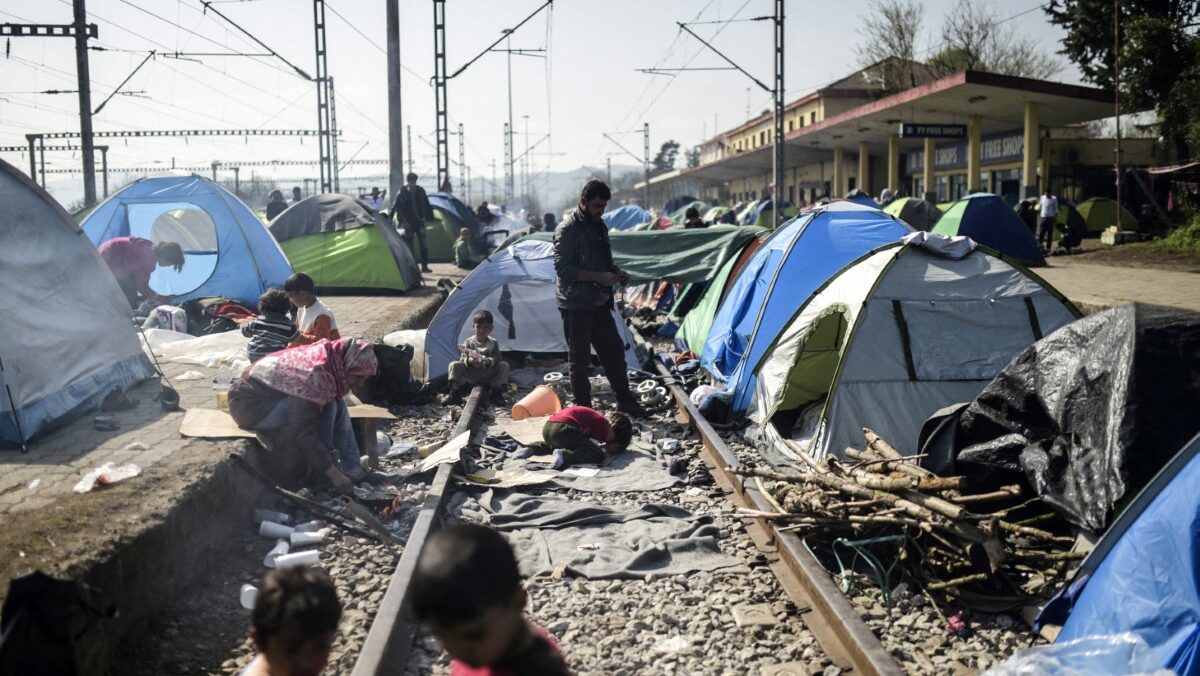
The war in Iran has not yet produced scenes comparable to Europe’s 2015 migration crisis, but concern is growing in Brussels that a prolonged conflict could eventually generate significant displacement toward the European Union.
With a population of nearly 90 million, Iran is demographically far larger than several countries that have recently experienced war-driven migration. Even a small percentage of its population choosing to leave could create a substantial flow. Economic hardship had already weakened domestic stability before the conflict intensified, as sanctions, high inflation, and declining purchasing power eroded living standards. If sustained violence, infrastructure damage, or state fragmentation were to follow, outward migration could accelerate.
Unlike the early years of the Syrian war, potential Iranian migrants may include more urban and middle-class citizens with financial means, education, and international networks. Ethnic and religious minorities could also feel especially vulnerable in a context of repression or institutional breakdown. This would not necessarily reduce migratory pressure but would shape the social composition of those on the move.
An additional factor complicates the outlook. For decades, Iran has hosted millions of Afghans. In recent years, authorities have stepped up deportations. If internal instability forces Tehran to focus on domestic security and cut costs, expulsions could increase. Many Afghans may then attempt to continue onward, potentially joining Iranian nationals on routes leading west.
As in 2015, Turkey would likely serve as the first major destination and buffer. Although Ankara has reinforced its eastern border, sustained pressure has historically tested even strengthened control systems. The 2016 migration agreement between Turkey and the European Union remains a key reference point. A renewed surge in arrivals could reshape negotiations between Ankara and Brussels, particularly if pressure extends to Greece, Bulgaria, and the Western Balkans.
The 2015 crisis brought more than one million asylum seekers into the EU within months, exposing deep political divisions among member states. Today, the EU operates under a new Pact on Migration and Asylum, which promises faster border procedures and solidarity mechanisms. However, the effectiveness of those measures has yet to be tested by a crisis of a similar scale.
Political conditions have also shifted. Many European governments now prioritize external containment, partnerships with third countries, and reinforced border management. While technical preparedness may have improved, political willingness to absorb large numbers of asylum seekers appears more limited.
Classifying Iran as a “safe country” would be difficult in the context of open conflict and documented repression, potentially leading to high recognition rates for asylum claims and longer-term stays within the EU. This would place additional strain on housing systems, public services, and integration frameworks.
European institutions have activated monitoring and coordination mechanisms with international agencies, but there are no visible large-scale expansions of reception capacity tailored to an Iranian scenario. For now, the emphasis appears to be on preventing migratory pressure from reaching EU borders rather than preparing for its internal management. Should the conflict intensify or the Iranian state destabilize, Europe could once again face the challenge of responding to a migration crisis rather than averting one.