
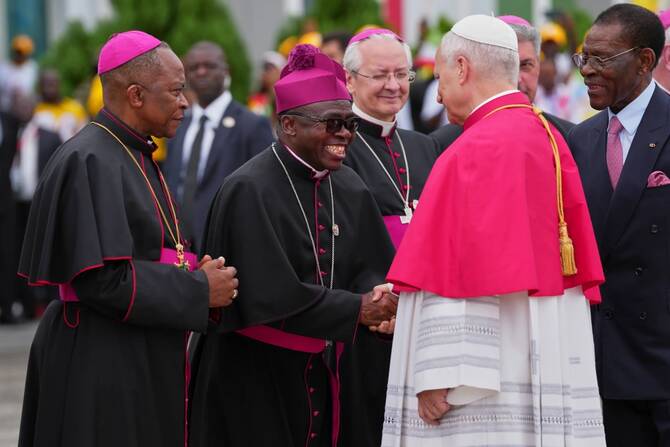
Pope Leo XIV has drawn global attention after visiting a well-known prison in Bata, placing a renewed spotlight on human rights concerns in Equatorial Guinea. The visit comes at a time of increased scrutiny following reports that migrants deported from the United States have been sent to the country under controversial agreements.
The prison visit is part of the Pope’s final engagements during his Africa tour, which also included stops in Algeria, Cameroon, and Angola. Before arriving in Bata, the Pope held a Mass in Mongomo and visited a memorial for victims of a deadly 2021 military barracks explosion, an incident widely linked to negligence.
Following the example of Pope Francis, Pope Leo XIV has made prison visits a key part of his mission. These visits are meant to offer hope to inmates while also drawing attention to issues such as overcrowding, poor conditions, and judicial injustice. His presence in Bata has reignited conversations about long-standing allegations of abuse within the country’s prison system.
Reports from organizations like Amnesty International and findings from the United Nations have repeatedly raised concerns about conditions in Equatorial Guinea. Allegations include arbitrary arrests, torture, political detentions, and a lack of judicial independence. Although the country abolished the death penalty in 2022, critics argue that broader systemic reforms are still needed.
The country is led by Teodoro Obiang Nguema Mbasogo, who has been in power since 1979. His administration has faced repeated accusations of corruption and authoritarian rule. Despite these claims, the government has consistently denied any human rights violations and has not publicly responded to recent concerns linked to deported migrants.
The issue has gained more attention following reports that migrants from other countries have been deported to Equatorial Guinea from the United States under policies introduced during the administration of Donald Trump. Investigations suggest that at least 29 migrants with no direct ties to the country have been sent there. While they are not held in the Bata prison, some are reportedly detained in the capital, Malabo, under limited access to legal and medical support, while others have been returned to their home countries where they may face persecution.
Pope Leo XIV, who is American-born, has openly criticised aspects of U.S. migration policies, describing some deportation practices as lacking respect for human dignity. His visit has therefore been seen as both symbolic and political, especially by human rights advocates.
Ahead of the visit, more than 70 human rights organisations released an open letter urging the Pope to speak out strongly against the deportation arrangements. They warned that such actions may violate international law, particularly the principle of “refoulement,” which prohibits sending individuals to countries where they could face harm or persecution.
Groups like EG Justice have also called for urgent reforms within the country’s justice system. Activists say there are still prisoners held for political reasons and others facing unfair trials. They argue that the Pope’s moral authority could push the government toward meaningful changes, including better prison conditions, access to healthcare, and judicial transparency.
While some observers note that the government has recently made small improvements to certain detention facilities, critics remain cautious. They believe these changes may only be temporary and linked to the high-profile papal visit. The real challenge, they say, will be whether these reforms continue after the global attention fades.
Pope Leo XIV’s visit has therefore become more than a religious gesture. It highlights ongoing human rights debates in Africa, the global impact of migration policies, and the role of influential leaders in advocating for justice. As the Pope concludes his African tour, many will be watching closely to see whether his visit leads to lasting change for prisoners and migrants in Equatorial Guinea.