
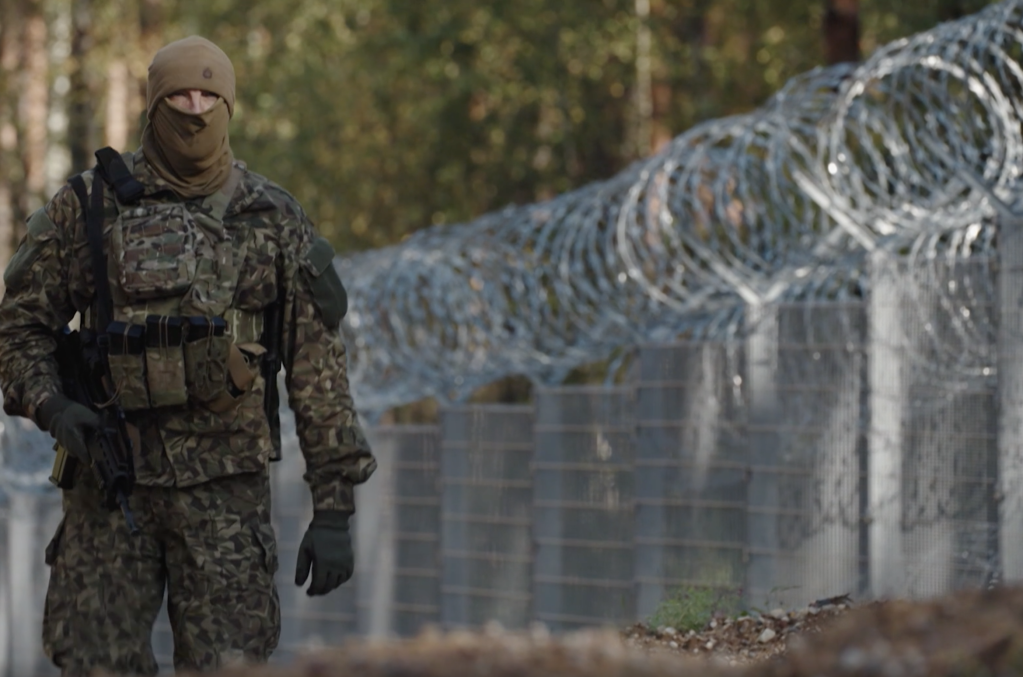
Latvian authorities have raised fresh concerns over increasing migrant pressure along their eastern border, accusing Belarus of actively encouraging irregular migration into the European Union. Officials say the situation, which slowed during winter, has started picking up again and could intensify in the coming months.
According to Latvia’s State Border Guard Chief, Guntis Pujāts, there has already been a steady flow of migrants recorded in April. Speaking in an interview, he warned that this trend is likely to continue through the summer. Authorities believe the movement is not random but part of a coordinated effort involving routes through Russia and Belarus into EU territory.
Latvian officials allege that organized networks are behind these crossings, with suspected cooperation between criminal groups and Belarusian actors. Many of the migrants attempting to cross into Latvia are not planning to stay there but are instead aiming to reach larger European countries such as Germany. This highlights how Latvia is being used mainly as a transit route rather than a final destination.
Authorities have also suggested that ongoing conflicts, particularly in the Middle East, could further increase migration pressure along this route. Reports indicate that some individuals are being recruited or directed to travel through Russia and Belarus as part of well-organized operations designed to move migrants into the EU.
Recent figures show that Latvian border forces have already detained at least 18 individuals this year for allegedly helping transport migrants. In addition, border security is being strengthened, with new technological systems expected to be completed later this year to improve surveillance and control along the eastern frontier.
Separate reports indicate that border enforcement remains active. Latvian officials recently turned back dozens of migrants at the Belarus border, while similar attempts were recorded in neighboring countries such as Lithuania. So far this year, around 650 irregular migrants have been prevented from entering Latvia, compared to over 1,600 during the same period last year.
The situation is part of a broader pattern across the EU’s external borders. Reports show that more than 80,000 migrant pushbacks were recorded across Europe in 2025, with incidents documented in countries including Latvia, Poland, Italy, and Bulgaria. Human rights organizations such as Amnesty International and Human Rights Watch have raised concerns about alleged mistreatment of migrants during such operations.
Officials in the Baltic region have repeatedly described the situation as a form of “hybrid warfare,” claiming that Belarus is using migration as a tool to pressure the European Union in response to sanctions. These claims have been denied by both Belarus and Russia.
Migrants using this route often come from countries such as Syria, Afghanistan, and Sudan. They typically travel first to Russia, then to Belarus, before attempting to cross into EU countries like Latvia, Poland, or Lithuania. Despite increased enforcement and tighter border controls, the route remains active and continues to pose challenges for both governments and migrants.