
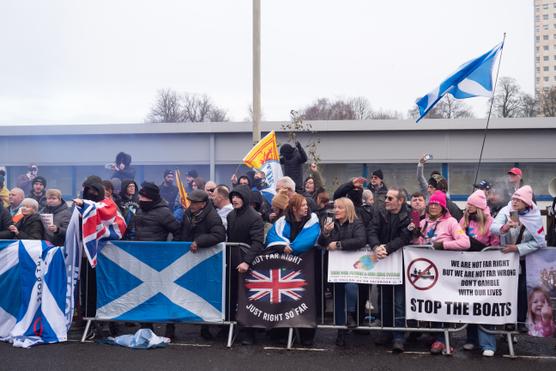
Anti-migrant protests are beginning to influence political support in Falkirk as regional elections take place across Scotland and Wales. Groups with strong views against asylum seekers are gaining attention, and parties like Reform UK are using this moment to grow their support.
In Falkirk, a small protest took place outside the Cladhan Hotel, where asylum seekers are being housed. The protest was organized by a group calling themselves “Scottish Patriots.” Although the number of people present was small, the message they shared reflects a wider trend that is spreading across the country.
The UK government, through the Home Office, has been placing asylum seekers in hotels since 2020. This policy was introduced to manage the rising number of people seeking protection. Many of these hotels are located in areas where housing is more available and less expensive.
However, this approach has created tension in some communities. Falkirk, once a strong industrial area, has faced economic challenges after factory closures. Nearby Grangemouth, which had Scotland’s last refinery, also saw operations stop in 2025. These economic struggles have made some residents more sensitive to issues like migration and housing.
The situation became more serious after the Southport knife attack in July 2024. Following that incident, protests against asylum accommodation increased across the United Kingdom. By 2025, these protests had grown larger, with far-right activists joining local residents and spreading anti-migrant messages both offline and online.
Political groups are now using this tension to their advantage. Reform UK, in particular, is gaining attention by focusing on migration issues. Their messaging connects local concerns, such as housing and jobs, to the presence of asylum seekers. This has helped them attract support in areas where people feel ignored or economically pressured.
However, the situation is more complex than it appears. While some residents worry about resources, others argue that targeting migrants does not solve deeper economic problems. Issues like unemployment, reduced industrial activity, and limited public services are long-term challenges that require broader solutions.
As elections continue, Falkirk has become an example of how migration debates can shape political outcomes. The growing influence of anti-migrant protests shows how quickly public opinion can shift, especially when economic concerns and political messaging come together.
In the end, the events in Falkirk highlight a bigger issue across the United Kingdom. Migration is becoming a central topic in politics, but without addressing the root causes of economic hardship, these tensions may continue to grow.