
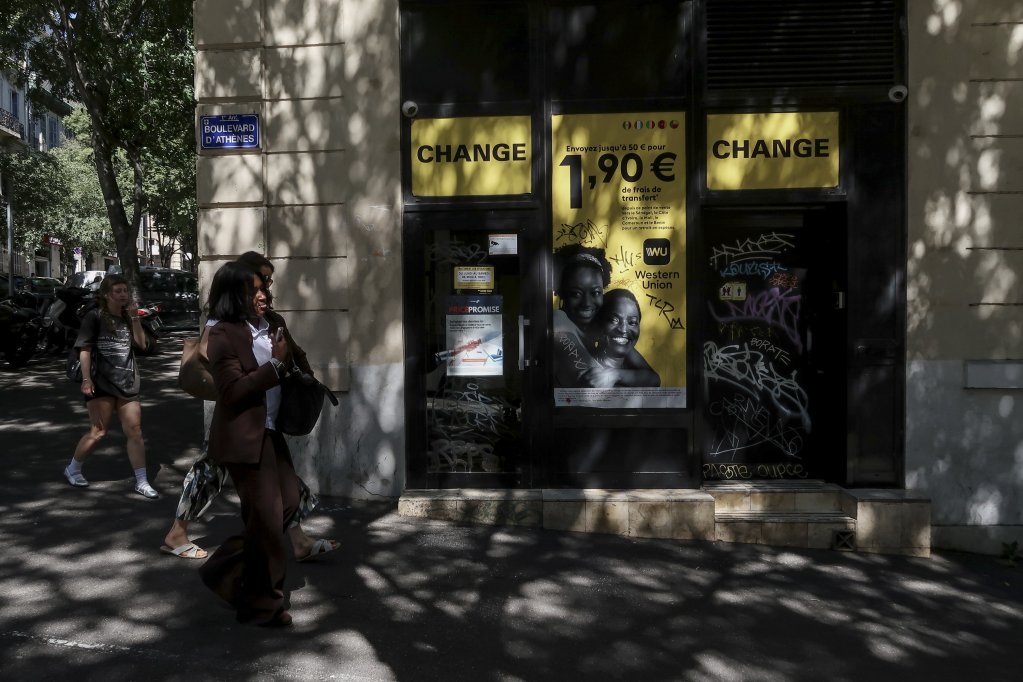
Despite rising inflation and increasing living costs in France, many migrants continue to send money to support their families back home. Experts say these remittances remain one of the most stable financial lifelines for millions of households worldwide, even during periods of economic hardship.
In the southern French city of Marseille, money transfer agencies remain busy as migrants continue sending part of their earnings abroad. For many, supporting family members is not optional but a responsibility they are determined to fulfill, even when it means sacrificing their own comfort.
One migrant, identified only as Abdel, recently visited a money transfer office to send 150 euros to his family in Morocco after learning that his mother was ill. Although his bank card was declined twice and he admitted he had already run out of money early in the month, he managed to complete the transfer using cash. Like many others, he said, helping his family remained his top priority despite his own financial struggles.
Another customer shared a similar experience, explaining that inflation has made life more expensive in France but that family emergencies leave little choice. Many migrants continue to send money regularly, especially when relatives need help with healthcare, food, education, or other basic needs.
According to the International Organization for Migration (IOM), remittances from France remained remarkably stable despite global economic uncertainty, armed conflicts, and widening inequality. In 2024, migrants living in France sent approximately 19.7 billion US dollars, or about 17 billion euros, to relatives in other countries.
Researchers say migrants usually reduce spending on themselves before cutting family support. Caroline Henchoz, a professor specializing in economic sociology and family studies, explained that migrants often spend less on food, clothing, and leisure activities in order to continue sending regular payments to parents and grandparents. However, larger investments such as funding businesses or paying for higher education are more likely to be affected during difficult economic periods.
Experts also point out that remittances have become one of the largest financial flows to developing countries, exceeding both foreign direct investment and official development assistance. These transfers play a major role in helping families meet daily needs while supporting local economies.
For many migrants, the financial burden is matched by emotional pressure. Families back home often depend on regular support, while some believe their relatives abroad are financially secure simply because they live in Europe. This creates additional expectations, even when migrants themselves are struggling with rising housing costs, inflation, and unemployment.
Jessie Mahongeu, a student at Aix-Marseille University from the Democratic Republic of the Congo, understands these pressures well. While working part-time at a fast-food restaurant to support himself, he also sends money to relatives whenever possible. He explained that many families back home do not fully understand how expensive life has become in France and assume that living abroad automatically means financial success.
Economists say remittances often increase during difficult economic periods because families in countries of origin face even greater challenges. This pattern, known as the “counter-cyclical effect,” means migrants often send more money home when economic conditions worsen, helping relatives cope with financial hardship.
Beyond providing financial support, experts believe migration creates stronger economic, educational, and social connections between countries. By sending money, sharing knowledge, and building international relationships, migrants continue to contribute to both their host countries and the communities they left behind, making migration an important driver of global development.