
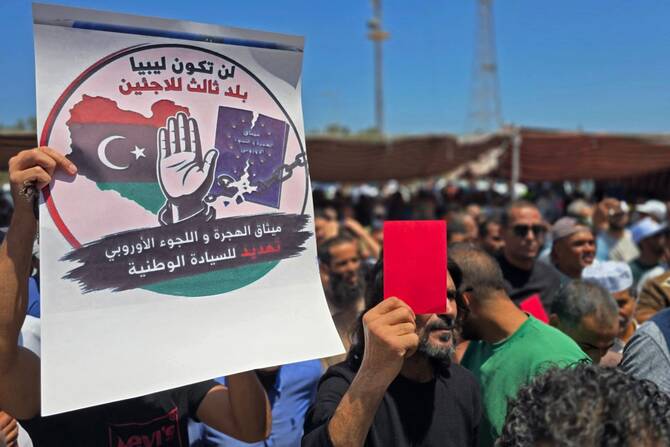
The eastern-based administration in Libya has announced a new immigration policy that bars citizens of four African countries from entering territories under its control. The decision affects nationals of Sudan, Eritrea, Ethiopia, and Somalia and applies to all official entry points, including airports, seaports, and land border crossings.
The measure was announced on Tuesday through a decree issued by the government led by Prime Minister Osama Hamad in Benghazi. The administration, which is aligned with military commander Khalifa Haftar, said the decision is part of broader efforts to improve migration management and strengthen border controls.
Officials described the move as an administrative measure aimed at organizing the entry of foreign nationals into Libya. However, authorities did not provide specific reasons for selecting the four countries affected by the ban.
Despite the restriction, several groups have been exempted from the policy. Accredited diplomats, consular staff, and their immediate family members from the affected countries will still be allowed to enter. In addition, professionals working in key sectors such as education, healthcare, and medical services may continue to enter Libya if they hold valid employment contracts and receive approval from the relevant authorities.
Libya has remained divided between rival governments for several years. The internationally recognized administration, led by Prime Minister Abdulhamid Dbeibah, operates from Tripoli in western Libya, while the eastern administration is based in Benghazi.
The country has struggled with political instability since the fall of Muammar Gaddafi in 2011 following a NATO-backed uprising. Years of conflict and division have created security challenges and weakened state institutions across the country.
Libya has also become one of the main transit routes for migrants and refugees seeking to reach Europe through the Mediterranean. Thousands of people fleeing conflict, poverty, and insecurity in Africa pass through Libya each year in hopes of finding safety and better opportunities in Europe.
According to recent United Nations data, more than 900,000 migrants are currently living in Libya. Observers believe the latest entry ban could affect migration patterns across North Africa, particularly for people from the four countries targeted by the measure. While authorities have not stated how long the restriction will remain in place, officials insist the policy is intended to strengthen border security and improve the management of migration amid ongoing challenges facing the country.