
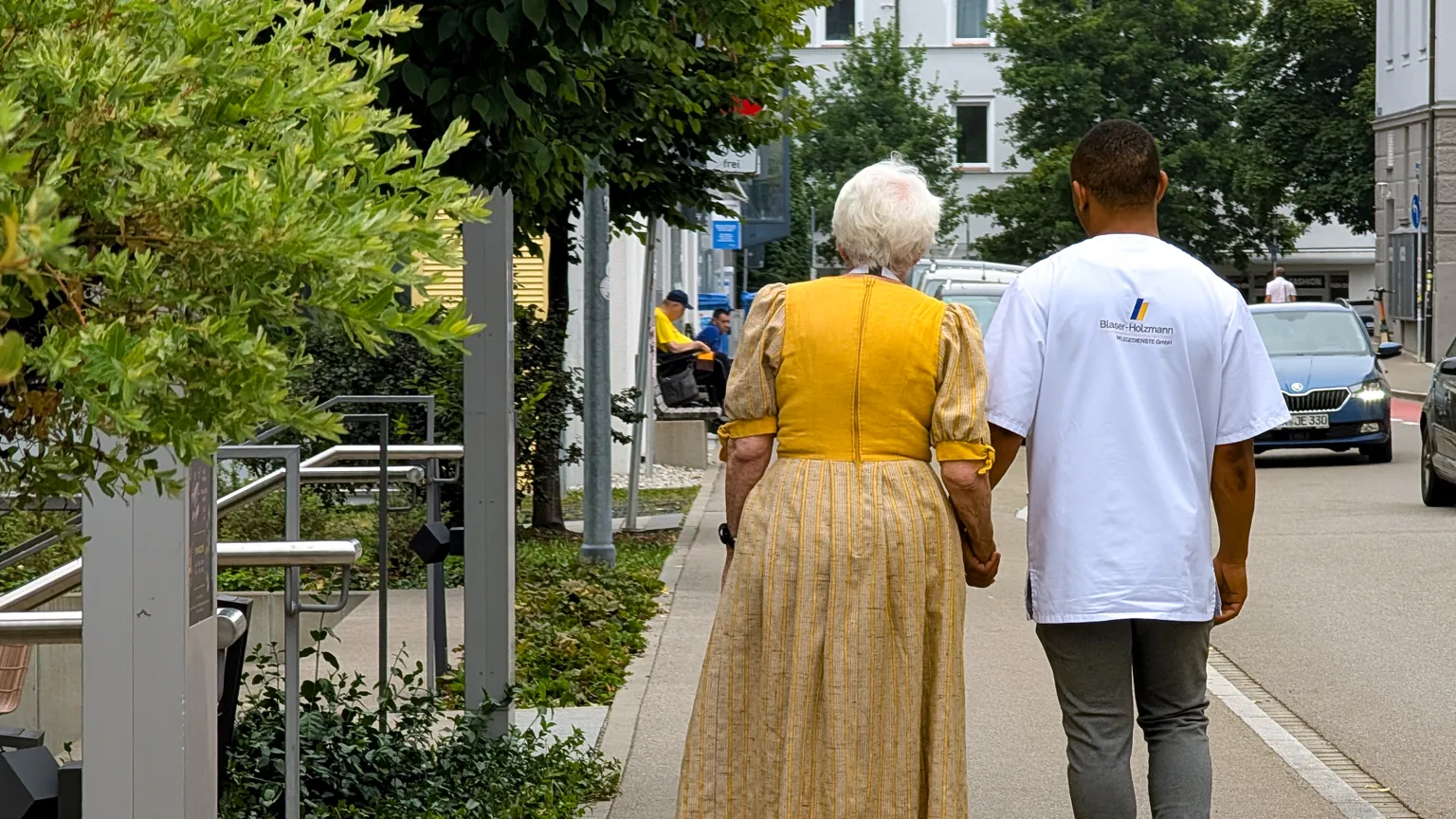
Germany’s growing elderly population is creating new opportunities for migrants and refugees who are helping to fill major gaps in the country’s healthcare and caregiving sector.
At the Immanuel Senior Care Center in Elstal, near Berlin, 26-year-old Pakistani Christian migrant Sharoon Masih spends his days serving meals, helping elderly residents with personal care, and offering emotional support to people who often struggle with loneliness.
Masih arrived in Germany in 2018 as an asylum seeker after facing religious persecution in Pakistan. His asylum application was initially rejected, leaving him at risk of deportation. However, support from a local church in Berlin helped him find work at the care center in 2021, eventually leading to residency approval.
According to Masih, his personal struggles helped him better understand the emotional challenges many elderly residents face.
“My experience taught me what it means to feel alone,” he explained, adding that he now sees care-giving as a way to support and encourage others.
Germany currently has one of the oldest populations in the world. Reports show that by 2035, around one-quarter of Germans will be older than 67 years. At the same time, the country is facing a serious shortage of caregivers and nursing professionals.
Recent estimates suggest Germany could face a shortage of nearly 60,000 nursing workers, while experts warn that hundreds of thousands of additional caregivers may be needed over the next two decades.
As a result, migrants are increasingly becoming part of Germany’s care workforce. Statistics from recent years show that nearly one in four nursing staff members in German care homes are foreign nationals. Many workers come from countries including Poland, Romania, Turkey, and Bosnia and Herzegovina.
Among them is 29-year-old Nigerian migrant Chizoba Okafor, who moved to Germany in 2022 from Enugu in southeastern Nigeria. Her asylum application is currently under review after an earlier rejection, leaving her under a temporary “tolerated stay” status.
While waiting for a final immigration decision, Okafor volunteers at a care center run by Diakonie Deutschland in Hannover. She helps elderly residents with daily activities while continuing to learn the German language.
Okafor said her Christian faith motivates her desire to care for older people, explaining that she regularly visited and prayed with elderly people in her church community back home in Nigeria.
She hopes to eventually secure formal vocational training or an entry-level care-giving job that could also help stabilize her residency situation in Germany.
German authorities have recently introduced policies making it easier for migrants to enter vocational training programs, especially in sectors facing labor shortages. Church-affiliated care organizations have also become more open to supporting migrants interested in care-giving roles.
Masih believes care-giving gives migrants an opportunity not only to build stable lives but also to positively impact the communities around them through compassion, kindness, and service.
Despite cultural and religious differences, he said many elderly residents appreciate companionship and emotional support during difficult stages of life.