
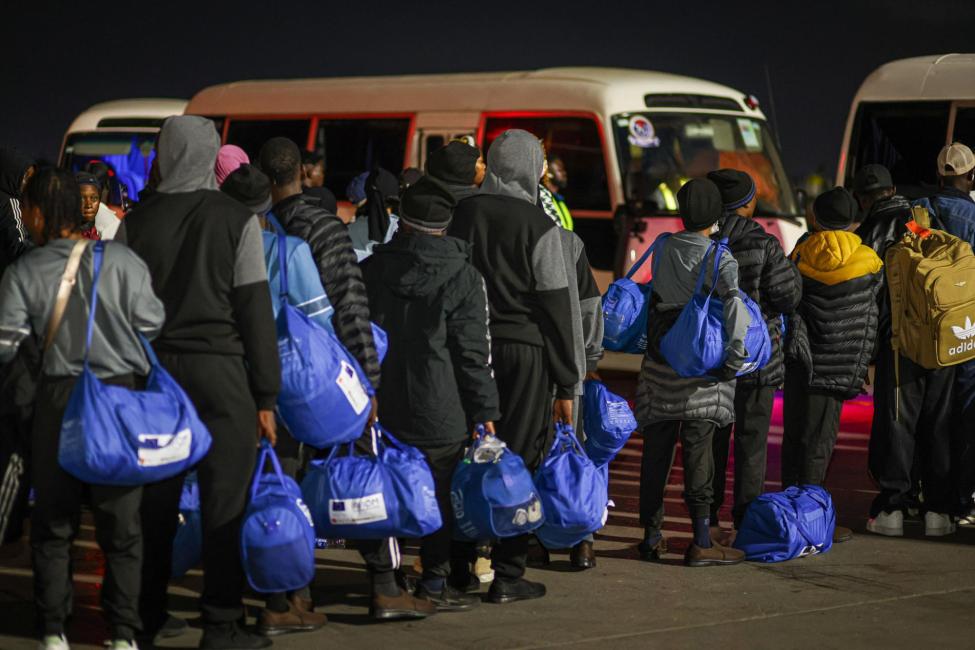
The International Organization for Migration (IOM) has revealed that it has helped more than 67,000 stranded Nigerian migrants safely return home since 2017 through its Assisted Voluntary Return and Reintegration (AVRR) programme.
The announcement was made by Fatima Adeyemi, IOM Project Assistant on Awareness Raising, during a three-day migration reporting workshop held in Lagos. The workshop, themed “From Headlines to Impact: A Capacity Building on Ethical and Data-driven Migration Reporting in Nigeria,” was organized to strengthen the capacity of Nigerian journalists to report accurately and responsibly on migration issues.
Adeyemi said that beyond helping stranded migrants return home, IOM has also provided psychological, social, and economic reintegration support to more than 30,000 returnees. She explained that the organization works closely with governments and development partners to find lasting solutions to displacement, save lives, and promote safe and regular migration.
According to her, IOM’s activities in southern Nigeria focus mainly on facilitating safe migration and strengthening migration management. The organization also collaborates with the Economic Community of West African States (ECOWAS) to support the legal movement of people across borders while promoting orderly migration throughout the region.
Adeyemi noted that raising awareness remains one of IOM’s top priorities. She said the organization is working with government secondary schools, including unity schools, military schools, and schools located near border communities, to educate young people about the dangers of irregular migration. The goal is to provide students with accurate information before they are misled by false promises from human traffickers or smugglers.
She also highlighted the role of the Migration Resource Centre located within Nigeria’s Federal Ministry of Labour and Employment. The centre provides guidance to people planning to migrate, helping them verify information about destinations, employment opportunities, and legal migration pathways. Adeyemi said many Nigerians are still unaware of the services available through IOM, making the media an important partner in increasing public awareness.
The IOM official added that the organization is working with the National Commission for Refugees, Migrants and Internally Displaced Persons to establish a national referral mechanism for stranded migrants. The initiative is expected to improve coordination and ensure vulnerable Nigerians receive timely assistance when they become stranded abroad.
She advised Nigerians facing difficulties in foreign countries to contact the nearest IOM office or the Nigerian Embassy for support. According to Adeyemi, IOM’s priority is to ensure the safe return of stranded migrants while helping them rebuild their lives through reintegration programmes that support employment, mental well-being, and community inclusion.
The latest figures highlight IOM’s continued efforts to promote safe migration, protect vulnerable migrants, and reduce the risks associated with irregular migration. Through awareness campaigns, partnerships with government agencies, and reintegration support, the organization hopes to ensure that more Nigerians make informed migration decisions and have access to assistance when they need it.