Close Menu
Migrant Affairs
    Trending News

    EU Opens Contact with Taliban Over Migrant Returns

    October 20, 2025

    EU Strengthens Europol Role to Fight Migrant Smuggling and Trafficking

    September 26, 2025

    EU Border Policies Under Scrutiny After Deadly Migrant Shipwreck

    March 1, 2024

    EU Records Highest-Ever Number of Asylum Applications in 2023

    February 28, 2024

    Doctors Without Borders Condemn European Union Migration Policies

    February 24, 2024

    UK gets EU intelligence on human trafficking

    February 23, 2024
    Facebook X (Twitter) Instagram
    Facebook X (Twitter) Instagram
    Migrant Affairs
    Subscribe
    • Home
    • About
    • News
    • Features
    • Contact
    • Privacy Policy
    • Terms and Conditions
    • Imprint
    Migrant Affairs
    Home » Spain Approves Transfer of 500 Migrant Children from Ceuta to Mainland
    News

    Spain Approves Transfer of 500 Migrant Children from Ceuta to Mainland

    August 19, 2026Updated:August 19, 20264 Mins Read
    Facebook Twitter LinkedIn Copy Link WhatsApp
    Spain migrant children Ceuta
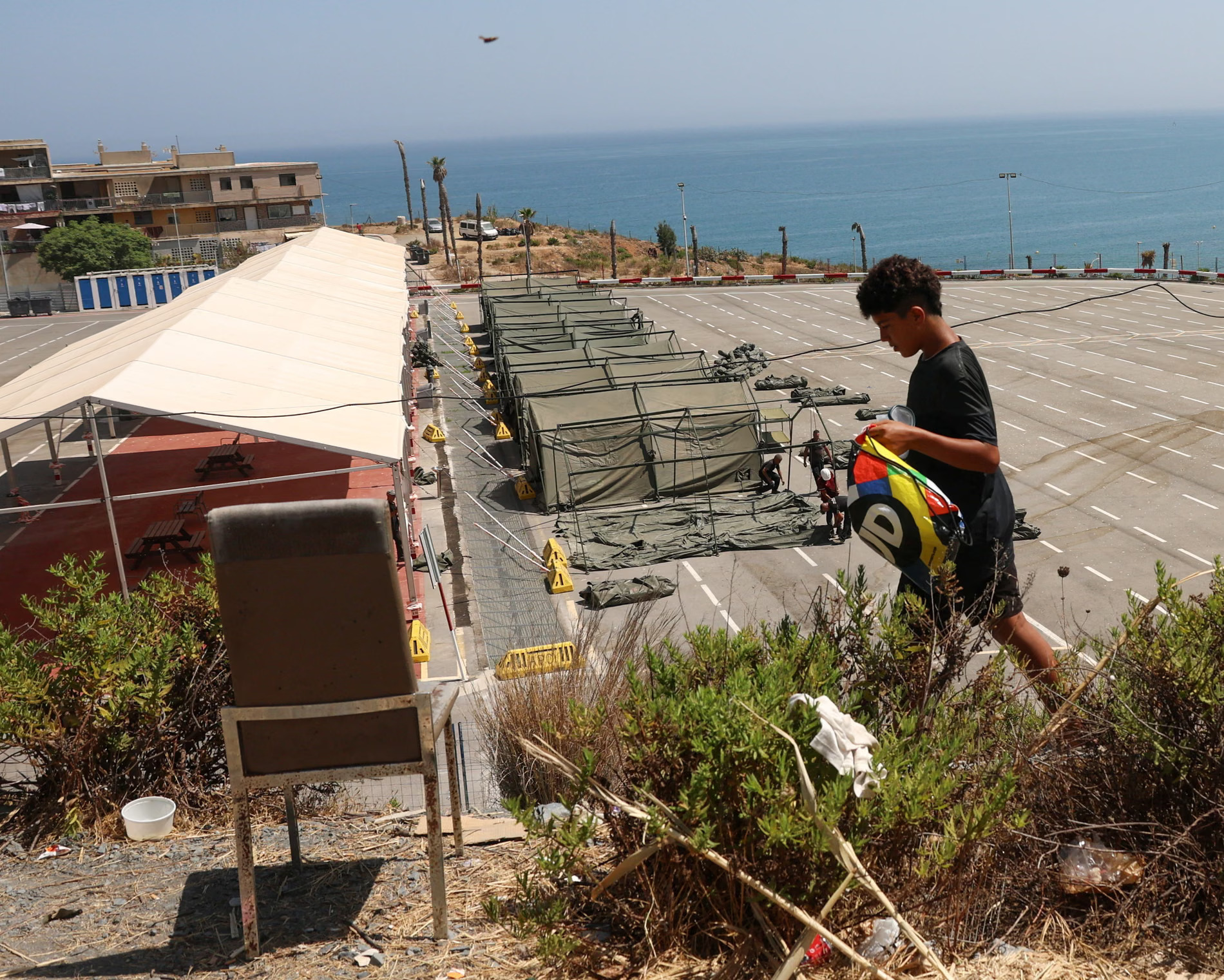
    Tents being set up in a public car park in Ceuta on Tuesday. Photograph: Violeta Santos Moura/Reuters. Source: The Guardian.
    Share
    Facebook Twitter LinkedIn Copy Link WhatsApp

    The Spanish government has approved the transfer of around 500 unaccompanied migrant children from Ceuta to mainland Spain, reversing an earlier position that migrants who entered the Spanish enclave irregularly would be returned to Morocco.

    The decision follows growing concern over the conditions facing children who remain in Ceuta nearly three weeks after an estimated 70,000 people crossed into the Spanish territory from Morocco on July 30.

    Although the vast majority of those who entered Ceuta have since returned to Morocco, hundreds of unaccompanied minors remain in the enclave. Under Spanish law, authorities have a duty to protect unaccompanied children until they reach adulthood.

    The government’s decision represents a significant shift from comments made by Interior Minister Fernando Grande-Marlaska on August 13. He said people who entered Ceuta or the neighbouring Spanish enclave of Melilla illegally should expect to be returned to Morocco under the two countries’ cooperation arrangements.

    Grande-Marlaska also said such migrants would not be permitted to travel to mainland Spain or remain indefinitely in the Spanish territories in North Africa.

    The planned transfer of the children has become politically sensitive, particularly because several Spanish regions governed by the conservative People’s Party and the far-right Vox have resisted or opposed accepting their share of unaccompanied migrant minors.

    To reduce political tensions, Spain’s Youth Ministry is working with the Ceuta authorities on an emergency arrangement that would involve non-governmental organisations and child-protection agencies taking responsibility for the most vulnerable children.

    Girls and other particularly vulnerable minors are expected to receive priority under the proposed arrangement. Their guardianship would not immediately be transferred to Spain’s regional governments, potentially avoiding a dispute over regional quotas for migrant children.

    Rubén Pérez Correa, Spain’s secretary of state for children, has been in Ceuta since Sunday to help address the situation. Officials are facing mounting concerns over reports that hundreds of children are living in precarious conditions and relying on assistance from local residents.

    The government’s announcement came shortly after the European Commission appeared to take a different position on the treatment of migrants remaining in Ceuta.

    Markus Lammert, the European Commission’s spokesperson for internal affairs, said EU rules require irregular migrants remaining in the enclave to be returned to Morocco, including unaccompanied minors.

    The contrasting positions have intensified the debate over Spain’s legal responsibilities towards migrant children and its obligations under the European Union’s evolving migration framework.

    Spain’s People’s Party has rejected the government’s relocation plan, arguing that the children should instead be reunited with their families.

    Juan Bravo, the party’s deputy finance spokesperson, questioned why Madrid would transfer the children to mainland Spain when Morocco had reportedly requested their return and the European Commission had indicated that irregular migrants should be returned.

    The disagreement is partly linked to the fact that the EU’s new migration and asylum pact has not yet been fully incorporated into Spanish national law.

    As a result, Spain’s existing legislation concerning the protection and guardianship of unaccompanied migrant children remains applicable, creating additional complexity for authorities attempting to respond to the Ceuta crisis.

    The situation has also highlighted the broader challenges Spain faces in caring for unaccompanied minors.

    According to figures from Spain’s Ministry of Inclusion and Migration, more than 21,000 people aged between 16 and 23 were under state guardianship as of March. Around 3,500 were younger than 17, while approximately half were Moroccan nationals.

    Girls accounted for about 8% of those under state protection.

    The planned relocation of the 500 children could provide them with access to more stable accommodation, education, healthcare and child-protection services on the Spanish mainland.

    However, the decision is likely to remain politically contentious as Madrid attempts to balance immigration enforcement, relations with Morocco, EU migration rules and its legal responsibility to protect children who arrive without parents or guardians.

    The developments also come amid heightened security along the Spain-Morocco border, following the unprecedented mass crossing into Ceuta and concerns that further attempts could take place.

    For the children still in the enclave, the government’s latest decision could mark a major change in their circumstances after weeks of uncertainty.

    Ceuta border crossing Ceuta migrant children Ceuta migrant crisis Ceuta migration Ceuta Morocco border EU migration pact European migration crisis migrant children Europe migrant children mainland Spain migrant children protection migrant children transfer Spain Spain asylum policy Spain immigration policy Spain migrant children Ceuta Spain migrant crisis Spain migration news Spain Morocco migration Spanish immigration law unaccompanied migrant children Spain unaccompanied minors Spain
    Share. Facebook Twitter LinkedIn Copy Link WhatsApp

    Related Posts

    Germany Suspends Nearly 9,000 Deportations After Migrants Go Missing

    August 19, 2026

    Vietnam Eases Digital ID Rules, Speeds Up Processing for Foreigners

    August 19, 2026

    Greece Arrests Four Minors Over Alleged Migrant Boat Smuggling in Crete

    August 19, 2026
    Top Posts

    Organizations Supporting Migrants and Refugees Worldwide

    The Impact of Social Media on Migrant Advocacy and Awareness

    Germany’s National Election 2025: Political Party Ideologies on Migration and Migrants

    Top Scholarships and Educational Opportunities for Migrants and Refugees in 2026

    Don't Miss

    Germany Suspends Nearly 9,000 Deportations After Migrants Go Missing

    August 19, 20263 Mins ReadBy RACHAEL ADEEGBE

    Germany was forced to suspend nearly 9,000 deportations during the first half of the year…

    Read More

    Germany Seeks Resumption of Migrant Transfers to Italy and Greece Under New EU Asylum Rules

    August 10, 2026

    Germany’s Top Court Orders Review of Afghan Visa Cases

    July 27, 2026

    German Court Jails Man for Seven Years Over Dangerous Migrant Smuggling Operations

    July 21, 2026

    Munich Airport to Build Dedicated Terminal for Migrant Deportations

    July 16, 2026

    Germany and Switzerland Arrest Five Suspected Members of Migrant Smuggling Network

    July 10, 2026
    RSS News Around
    Stay In Touch
    • Facebook
    • Twitter
    • LinkedIn
    • WhatsApp
    RSS More News
    • Germany's rusting sea munitions are a toxic time bomb
    • Amanal Petros: From refugee to European champion
    • Bayern Munich's Jamal Musiala collapses on pitch again
    • Nord Stream: Second suspect arrested over pipeline blasts
    • As drought hits Germany's harvest, will food prices rise?
    Recent posts
    • Germany Suspends Nearly 9,000 Deportations After Migrants Go Missing
    • Vietnam Eases Digital ID Rules, Speeds Up Processing for Foreigners
    • Greece Arrests Four Minors Over Alleged Migrant Boat Smuggling in Crete
    • Spain Approves Transfer of 500 Migrant Children from Ceuta to Mainland
    • Thousands of Migrants Remain Stranded in Ceuta as Aid Groups Warn of Humanitarian Crisis
    About Us

    A news and information site documenting and sharing relevant and helpful stories and resources for and about Migrants.

    Email Us: info@migrantaffairs.info

    Facebook X (Twitter) WhatsApp
    Top Stories

    Germany Suspends Nearly 9,000 Deportations After Migrants Go Missing

    August 19, 2026

    South Africa Anti-Migrant Group Sets September 30 Deadline for Undocumented Foreigners

    August 17, 2026

    Trump-Linked Law Firm Rejects $150 Million Contract to Represent Migrant Children

    August 13, 2026
    RSS Business News
    • Who really owns the Caspian Sea?
    • As drought hits Germany's harvest, will food prices rise?
    • Norway wealth fund sounds alarm on AI stock market bubble
    • EU waste packaging rules: Why small businesses are worried
    • How the Rhine drought threatens Germany's economic recovery
    RSS Expat Jobs
    Migrant Affairs
    • Home
    • About
    • News
    • Features
    • Contact
    • Privacy Policy
    • Terms and Conditions
    • Imprint
    © 2026 Migrant Affairs

    Type above and press Enter to search. Press Esc to cancel.