
Lithuania supports plans by several European Union countries to establish migrant return hubs outside the bloc, but says it does not currently need to participate in the initiative.
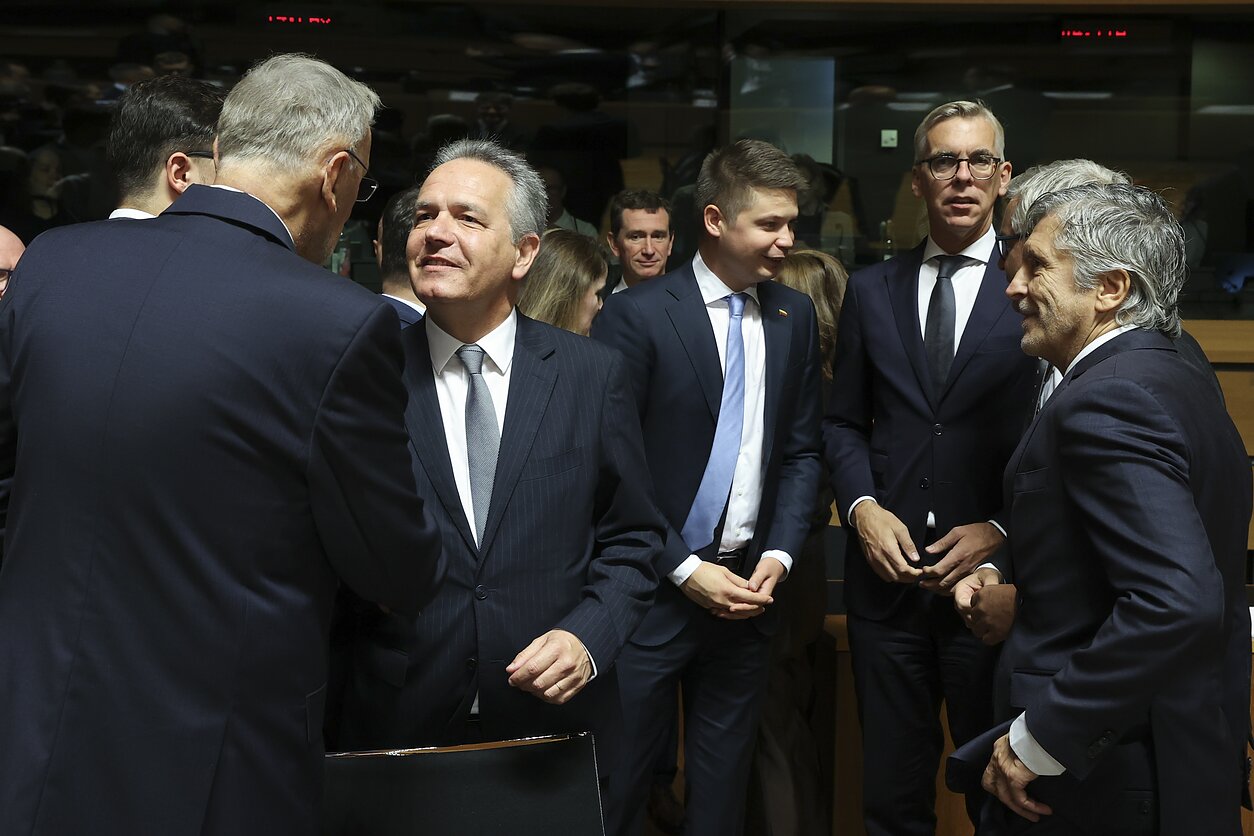
EU interior ministers discussed the proposed return hubs at a meeting in Luxembourg on Thursday, as the bloc moves to strengthen procedures for people who have no legal right to remain in the EU.
The initiative is being developed by Denmark, Austria, Greece, Germany and the Netherlands. Rwanda and Uganda have been mentioned as possible locations, although no final host country has been publicly confirmed. Discussions among the five countries are continuing.
Under new EU rules formally adopted on October 1, member states can establish return hubs in non-EU countries for people who have received return decisions. Such arrangements must comply with international human rights standards and the principle of non-refoulement. Unaccompanied minors are excluded from the arrangements.
The centres could be used either as final destinations or as transfer points before people are returned to their countries of origin or another country.
Lithuanian Interior Minister Martynas Katelynas said Lithuania supports the efforts of other EU countries but does not currently face migration pressure on a scale that would require it to join the return-hub initiative.
He said Lithuania could reconsider its position if circumstances change.
Katelynas also said EU countries currently implement only around one-third of decisions requiring migrants to leave, highlighting what he described as a wider problem with enforcing return decisions.
Lithuania’s own irregular migration situation is currently considered manageable, although the country experienced an increase in secondary migration earlier this summer. About 200 irregular migrants were being held at Lithuania’s Foreigners Registration Centre, with most expected to be returned to Latvia or other Schengen countries, according to Katelynas.
The Lithuanian government has also called for stronger EU cooperation on returns and border management. In September, Katelynas said EU member states needed greater capacity to respond when migration is used as a form of pressure and argued that they should include prevented attempts to cross the EU’s external borders when assessing migration pressure.
Human rights organisations and some members of the European Parliament have criticised the proposed return hubs. During a recent visit to Rwanda and Uganda, Green MEPs Anna Strolenberg and Tineke Strik raised concerns about human rights, conditions in potential facilities and the effect such centres could have on local communities.
Amnesty International has also warned that return hubs could create risks of arbitrary detention, mistreatment and onward returns if adequate safeguards are not put in place.
The EU Council says any country hosting a return hub must respect international human rights standards and international law, including protection against refoulement. The new rules are part of the EU’s wider effort to increase the number of people who actually leave the bloc after receiving return decisions.
The Luxembourg meeting also covered the EU’s response to sudden migration emergencies and efforts to improve early warning systems. The discussions follow the large-scale arrival of migrants in Spain’s North African enclave of Ceuta this summer, which has increased pressure on EU governments to strengthen border controls and return procedures.
Lithuania is also supporting discussions on possible restrictions involving Schengen visas for Russian citizens, another issue raised during the EU interior ministers’ meeting.