
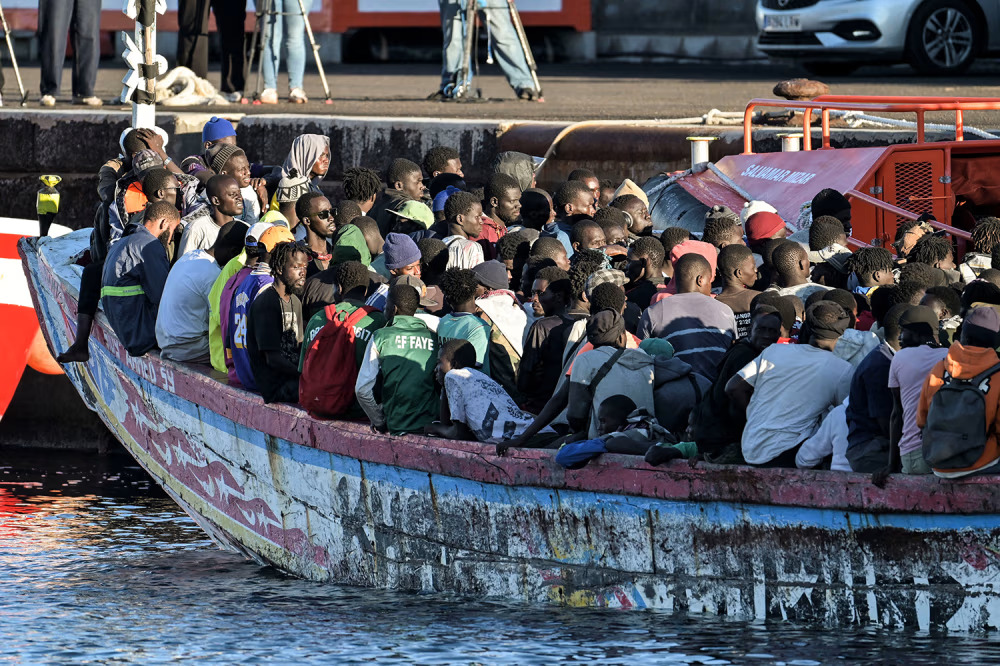
Spain’s Canary Islands have received more than 2,200 migrants within two days following a fresh surge in arrivals from West Africa and other parts of sub-Saharan Africa, putting further pressure on authorities in the Atlantic archipelago.
The latest arrivals came in small boats, including traditional fishing vessels known as cayucos and other makeshift boats attempting the dangerous sea crossing to Spanish territory.
One of the largest groups arrived on the island of El Hierro, where 14 boats brought a total of 1,324 migrants ashore. The island has a population of approximately 12,000 residents, raising concerns about the pressure that sudden arrivals place on its limited reception facilities and local services.
The latest surge comes as Spain’s government maintains an emergency response to the migration situation in the Canary Islands. The government declared an emergency for the archipelago last week as authorities continued dealing with the growing number of arrivals.
The Atlantic route from West Africa to the Canary Islands remains one of the most dangerous migration routes into Europe. Migrants and asylum seekers often undertake lengthy sea journeys in overcrowded and poorly equipped boats, exposing themselves to the risk of drowning, dehydration and other life-threatening conditions.
The latest developments come only months after Spain experienced another major migration incident in its North African territory of Ceuta, where tens of thousands of people reportedly crossed the border from Morocco in July.
The growing number of arrivals has added to the challenges facing Spanish authorities as they attempt to manage migration, provide emergency assistance and coordinate the reception of people arriving by sea.
Spain has also experienced widespread public protests and industrial unrest in recent weeks, although the demonstrations have largely focused on housing affordability and the rising cost of living.
A nationwide general strike earlier in November disrupted public transport, affected businesses and led to clashes between protesters and police in several locations. Barcelona witnessed particularly tense scenes, with demonstrators setting fires and damaging property during protests over rising housing costs and tourism.
Housing activists estimated that 400,000 people participated in demonstrations in Barcelona, while city officials put attendance at approximately 55,000. Another 120,000 people reportedly gathered in Madrid, according to government figures cited by The Associated Press.
Migration and housing pressures are expected to feature prominently in Spain’s November 29 parliamentary elections, as political parties face growing public debate over immigration management, living costs and access to housing.