
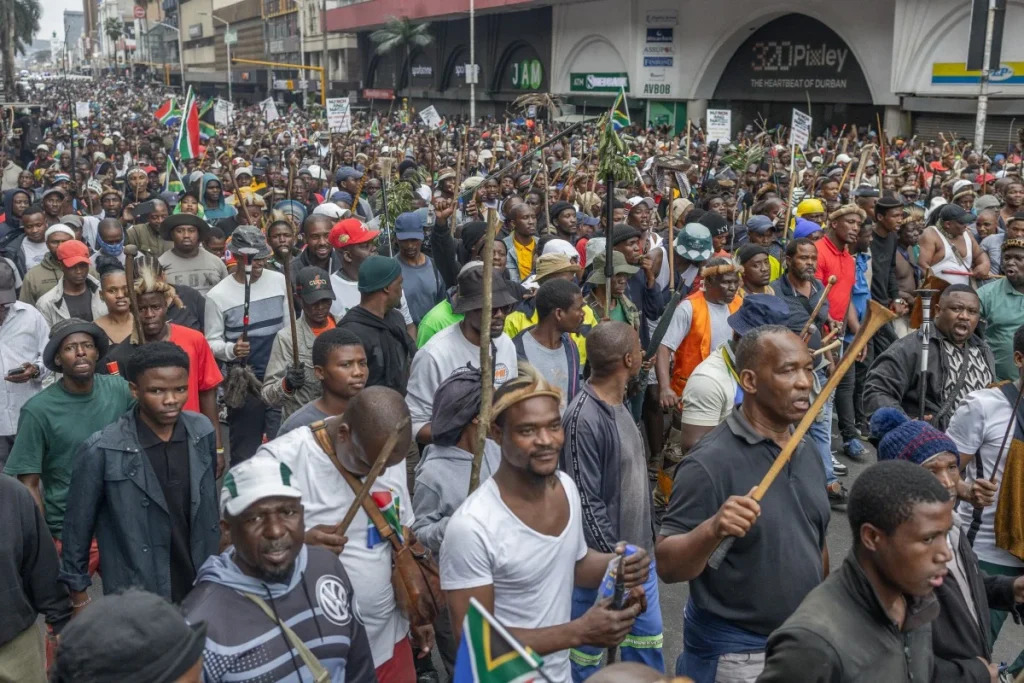
More than 160,000 foreign nationals have left South Africa over the past two months amid escalating anti-migrant unrest and fears of violence, according to an AFP tally based on repatriation figures released by governments across Africa.
The departures come after weeks of protests targeting undocumented migrants, with some demonstrations turning violent and reportedly resulting in the deaths of several foreign nationals.
Zimbabwe and Malawi recorded the largest numbers of citizens returning home, while nationals from Ghana, Kenya, Lesotho, Mozambique, Nigeria and Uganda have also left South Africa amid growing security concerns.
Zimbabwe’s government said 108,366 Zimbabweans had returned home as of July 18, with most arranging their own repatriation.
Malawi reported that more than 46,890 of its citizens had returned since early June, with the government deploying 699 buses to facilitate the journey. Six people reportedly died while travelling home.
South African government figures also indicate that nearly 2,000 Mozambicans have returned to their country.
The latest wave of departures follows growing pressure from anti-migrant groups demanding that undocumented foreign nationals leave South Africa. Many migrants reportedly sought assistance at consulates and community centres, travelling home with limited belongings as fears of attacks increased.
Two Mozambican nationals were reportedly killed following a protest in the southern town of Mossel Bay in late May. South African authorities later confirmed the deaths of an Ethiopian and a Malawian national in incidents linked to what they described as “anti-foreigner sentiment.”
Nigeria has also reported that two of its nationals died amid what it described as ongoing xenophobic protests and attacks against migrants. Ghana said one of its citizens was killed in a Cape Town township during demonstrations linked to anti-immigrant violence.
South African authorities have disputed some of the allegations and warned that misinformation is circulating online.
Nigeria has repatriated approximately 1,490 citizens, while Ghana has brought home at least 926 nationals, according to figures released by their respective governments.
The unrest has prompted calls for the issue of Afrophobia to be addressed at the next African Union summit. Ghana has also postponed a planned visit by South African President Cyril Ramaphosa.
South Africa has long attracted migrants from across the continent seeking employment and economic opportunities unavailable in their home countries. However, tensions have intensified in communities facing high unemployment, poverty and inadequate public services.
Anti-migrant groups accuse foreigners of taking jobs and contributing to crime, but analysts argue that migrants are being scapegoated for longstanding economic and governance problems. South Africa’s unemployment rate remains above 30%, while many communities continue to struggle with poor public services and limited economic opportunities.
The latest protests began last year, initially focusing on undocumented migrants’ access to public healthcare facilities. Demonstrations intensified ahead of a June 30 deadline imposed by anti-migrant groups and have continued since then.
The March and March movement has reportedly pledged to continue organising weekly demonstrations until local government elections in November.
South Africa has experienced repeated waves of xenophobic violence over the past two decades. Anti-immigrant riots in 2008 killed 62 people and displaced thousands, while further outbreaks occurred in 2015 and 2016. In 2019, attacks on foreign-owned businesses around Johannesburg left at least 12 people dead.
However, the latest crisis marks the first time that multiple African governments have simultaneously organised coordinated voluntary repatriation programmes for thousands of their citizens amid threats of anti-migrant violence.