
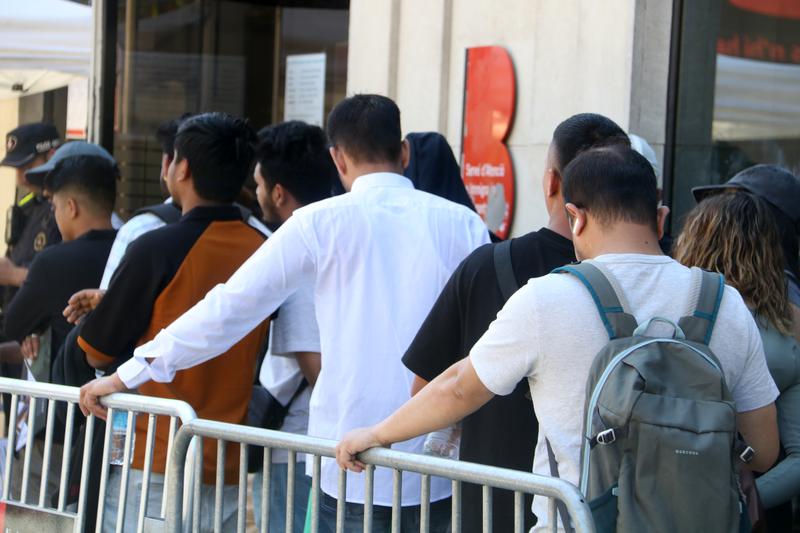
Authorities in Barcelona have announced a major step to manage the surge in migrant regularisation applications by opening a large processing centre at Fira de Montjuïc. The move is aimed at reducing long queues and speeding up administrative procedures for thousands of applicants.
The initiative comes after Spain launched an extraordinary migrant regularisation programme in April, which could allow up to 500,000 undocumented migrants to gain legal status. In Catalonia alone, officials estimate that around 150,000 people may benefit from the scheme before it closes at the end of June.
Since the process began, demand has overwhelmed existing offices across Barcelona, with queues stretching for several blocks. In response, the city council will open Hall 2 of the Montjuïc exhibition venue to centralise and streamline services, marking what officials describe as the “second phase” of the process.
At the new site, migrants will be able to book appointments, submit documents, and receive guidance on their applications. The centre will initially open at 10am and later operate extended hours from 8am to 10pm to handle the high volume of applicants more efficiently.
One key focus of the new system is assisting residents who are not officially registered on the city census, known as “empadronament.” These individuals will now be able to begin the registration process at the Montjuïc site by providing proof of continuous residence in the city.
So far, the city council has processed a large volume of documentation, including 94,000 residency registration certificates and 17,000 vulnerability reports. An additional 20,000 reports have been issued digitally but are yet to be collected.
To further support applicants, the city has also expanded its network of assistance centres, including the SAIER office and locations in Sant Miquel and Hostafrancs. However, officials plan to centralise most services at Montjuïc and a few key sites from mid-May to improve efficiency.
City leaders say the goal is not only to reduce waiting times but also to improve the overall quality of service, ensuring that migrants can complete their applications in a more organised and accessible way.