
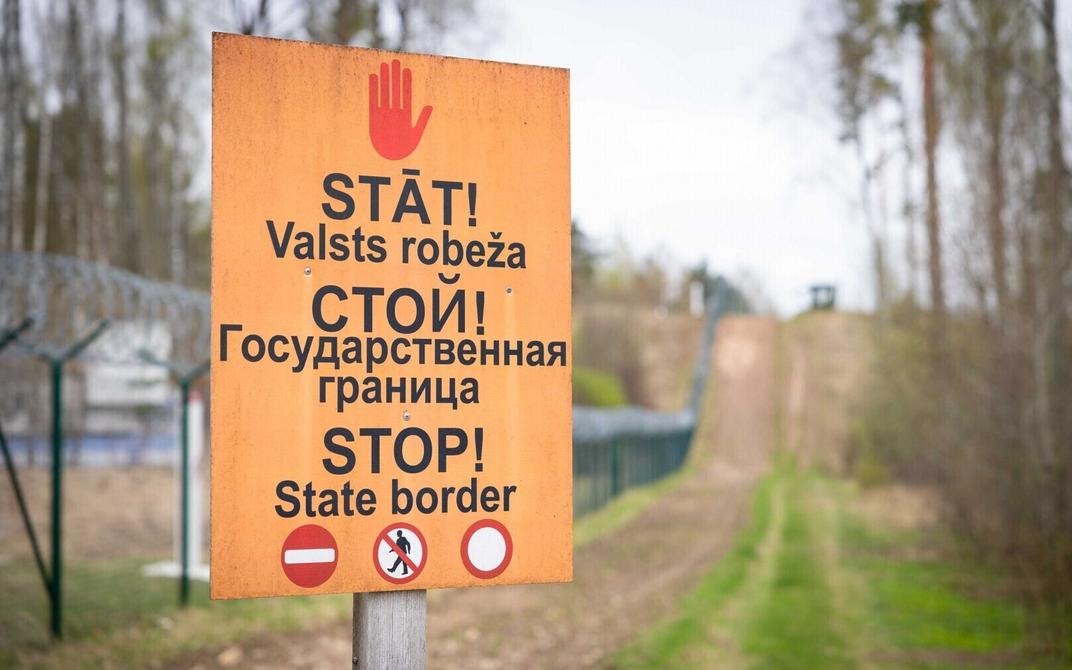
Estonia has announced the deployment of additional police officers and border guards to Latvia to help reinforce security along the European Union’s external border, as authorities face increasing migration pressure linked to the Belarus-Latvia frontier.
Estonian Interior Minister Igor Taro said the decision follows the recent detection of several dozen irregular migrants in Estonia who had initially crossed into Latvia from Belarus before travelling north.
Speaking after visiting the Latvia-Belarus border last week, Taro described the situation as “extremely serious,” saying migration pressure has intensified in recent weeks.
He claimed Belarusian authorities were deliberately directing migrants toward the European Union’s external border by transporting them to forested areas, housing them in temporary camps and providing equipment intended to help them cross border barriers.
“The situation is quite complicated,” Taro said, describing what he called a growing buildup of migrants along the frontier.
The Estonian minister also argued that the increased migration pressure forms part of a broader strategy by Russia and its ally Belarus to destabilise European countries that support Ukraine.
According to Taro, irregular migration places a significant strain on national resources, requiring governments to expand migrant reception facilities, provide accommodation and deploy interpreters, healthcare workers and other specialists to manage arrivals.
He noted that Latvia is currently experiencing the greatest pressure but warned that Estonia has also begun to see the effects of the situation.
In recent days, Estonian authorities detained more than 30 migrants in the capital, Tallinn, after they travelled from Latvia following an irregular crossing of the Belarus-Latvia border. Officials said most of the migrants intended to continue their journey to Finland.
Taro said Estonia is now better equipped to respond to migration-related challenges than it was in previous years, following significant investments in strengthening its external border.
The country has expanded border infrastructure by constructing fencing, installing advanced surveillance systems and deploying additional monitoring equipment designed to improve border security.
However, the minister acknowledged that border fencing alone cannot completely prevent irregular crossings. Instead, he said the primary purpose of the barrier is to delay unauthorised entry long enough for border guards to respond and intercept those attempting to cross illegally.
The latest deployment reflects growing regional cooperation among Baltic states as Estonia, Latvia and Lithuania continue to strengthen border security amid persistent migration pressure along the European Union’s eastern frontier.