
Egypt is urging the European Union to increase financial support as it continues to host what it describes as millions of refugees and migrants, while serving as a key buffer against irregular migration toward Europe.
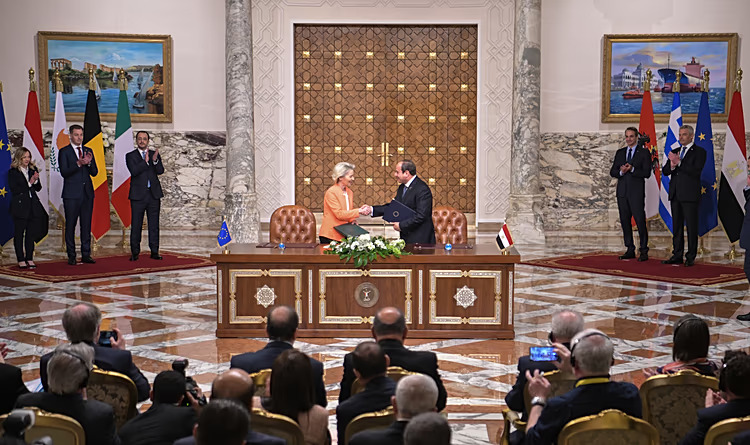
The debate comes as the EU strengthens its migration partnership with Egypt through a wider strategic agreement covering political cooperation, trade, security, and migration management. European leaders view Egypt as a crucial partner in controlling movement across the Mediterranean.
Under the current arrangement, the EU has pledged billions of euros in support for Egypt, including funding aimed at economic stability and migration-related programmes. A portion of this package is specifically directed at managing migration flows and supporting border control efforts.
However, Egyptian officials argue that the assistance does not match the scale of responsibility the country carries. Cairo says it is hosting more than 10 million migrants and refugees, though United Nations estimates for registered refugees are significantly lower.
The government estimates that providing services such as housing, healthcare, education, and subsidies costs more than €8.5 billion annually. Officials say rising inflation, currency pressure, and a growing population of displaced people have increased the financial burden.
The situation has become more urgent following the war in Sudan, which has driven large numbers of displaced people into Egypt. Refugees from countries such as Sudan, Syria, and others now form a significant part of urban populations in cities like Cairo and Alexandria.
European policymakers, meanwhile, see cooperation with Egypt as essential to preventing irregular migration across the Mediterranean. The EU has framed its financial package as part of a “strategic partnership” that links migration control with broader development and economic support.
But the agreement has faced criticism from some members of the European Parliament and rights organisations. They warn that funding migration control without strong human rights safeguards could lead to abuses against refugees and asylum seekers.
Human Rights Watch and other observers have raised concerns about detention practices, deportations, and the lack of transparency in migration enforcement policies in partner countries.
Egyptian officials defend their approach, arguing that migration must be treated as a shared global responsibility. They are also calling for more legal migration pathways and long-term funding that goes beyond short-term aid packages.
As economic pressure increases inside Egypt, including rising rent and inflation in major cities, the government says international support remains essential. However, it insists that current EU funding still falls short of what is needed to manage the growing humanitarian burden.
The disagreement highlights a broader tension in EU migration policy: balancing border control priorities with the financial and social realities faced by countries hosting large displaced populations.