
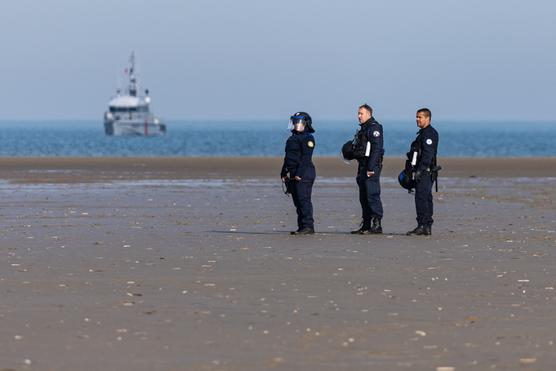
French authorities have started intercepting migrant boats in the English Channel as part of a new strategy to reduce crossings to the United Kingdom. The policy marks a major shift in approach, as France had previously avoided such interventions due to the high risk of capsizing and drowning.
The change, gradually introduced since November 2025, now allows France’s maritime forces to stop small inflatable boats already at sea. According to reports, at least seven interceptions have taken place so far under the new rules.
This move comes amid continued high numbers of crossings. Since the start of 2026, more than 6,000 migrants have successfully reached the UK using small boats, highlighting the ongoing pressure on both French and British authorities to find effective solutions.
The policy has been carefully coordinated with legal authorities. Laurent Touvet, France’s top immigration official, stated that extensive discussions were held with judicial bodies to ensure that maritime officers would not face legal consequences while carrying out these risky operations.
French enforcement efforts are particularly focused on stopping so-called “taxi boats.” These boats are launched from points away from the heavily monitored Pas-de-Calais coastline, then move closer to shore where migrants board directly from the water. This tactic is widely used to avoid police presence on beaches and has become a key method for smugglers.
By intercepting boats at sea, authorities aim to disrupt these operations before migrants can begin the dangerous journey across the Channel. However, the approach remains controversial due to safety risks. Experts and humanitarian groups have long warned that intervening at sea could increase the likelihood of accidents, especially when boats are overcrowded and unstable.
The policy is also being examined as part of a broader review linked to the Touquet Treaty, which governs border controls between France and the UK. Ongoing parliamentary discussions are assessing whether current strategies are effective or need further adjustment.
Despite the tougher enforcement, crossings remain high, suggesting that deterrence alone may not be enough to stop migrants. Many individuals continue to attempt the journey due to conflict, poverty, and limited legal migration pathways.
France’s decision to intercept boats at sea signals a more aggressive stance in managing migration. However, balancing enforcement with safety remains a key challenge, as authorities try to prevent crossings without increasing the risks faced by migrants on one of Europe’s most dangerous routes.