
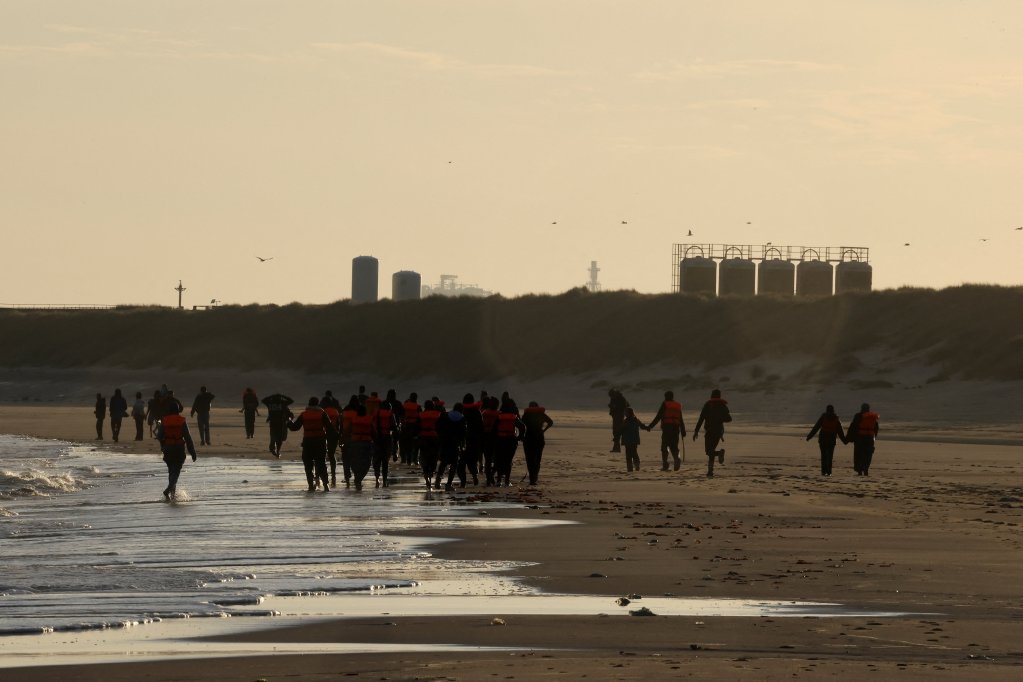
Authorities in northern France say more migrants are attempting to cross the English Channel to the United Kingdom from Seine-Maritime, an area farther from Calais that has seen a sharp increase in departures this year.
The Seine-Maritime prefecture recorded 56 attempted crossings between January and September 15, compared with 31 during the whole of 2025. Officials said the increase has been particularly noticeable around Dieppe, while departures are now also spreading farther south towards Le Havre.
Jean-Benoît Albertini, prefect of Seine-Maritime and Normandy, said pressure on the department had increased significantly. Authorities said 82 percent of the attempted departures recorded in the area were linked to the Dieppe region.
The changing departure points are creating additional challenges for French authorities, as smugglers appear to be using longer and more difficult routes to avoid heavily monitored areas along the northern coast.
Police have also reported changes in the boats being used. Larger vessels, sometimes carrying hundreds of people, have been detected. One 18-metre rigid inflatable boat intercepted this year was reported to have carried about 230 passengers.
In another case, an overcrowded migrant boat was spotted off Jobourg on September 5 after travelling a considerable distance along the French coast. The vessel eventually reached Portsmouth in southern England.
According to French authorities, smugglers have also been moving migrants from the Hauts-de-France region towards Normandy by road or rail before taking them by boat along the coast. Migrants from countries including Sudan, Syria, Iraq and areas of Kurdistan have been among those making the journey.
The increase in attempted crossings has also been accompanied by more arrests of suspected smugglers. The number of smugglers arrested and convicted in the region has risen from four in 2024 to eight so far this year.
French authorities said additional personnel will be deployed along the coastline. The number of gendarmerie reservists involved in patrols is expected to increase from 16 to 50, while police numbers will rise from 11 to 19.
The additional resources are being financed through the UK’s Sandhurst Fund, which supports French efforts to tackle irregular Channel migration under a bilateral agreement between the two countries.
The crossings remain dangerous. At least 17 people have died while attempting to cross the Channel since the beginning of 2026, according to an InfoMigrants count. Overcrowded boats can increase the risks of drowning, suffocation and people falling or being crushed during the journey.
European support is also being added to search-and-rescue operations. Frontex is deploying vessels to assist French authorities in the Channel, although the agency’s ships will not take part in interception operations.
Two Spanish vessels are scheduled to operate between September and October, followed by a Lithuanian vessel expected to remain in the area until January 2027.