
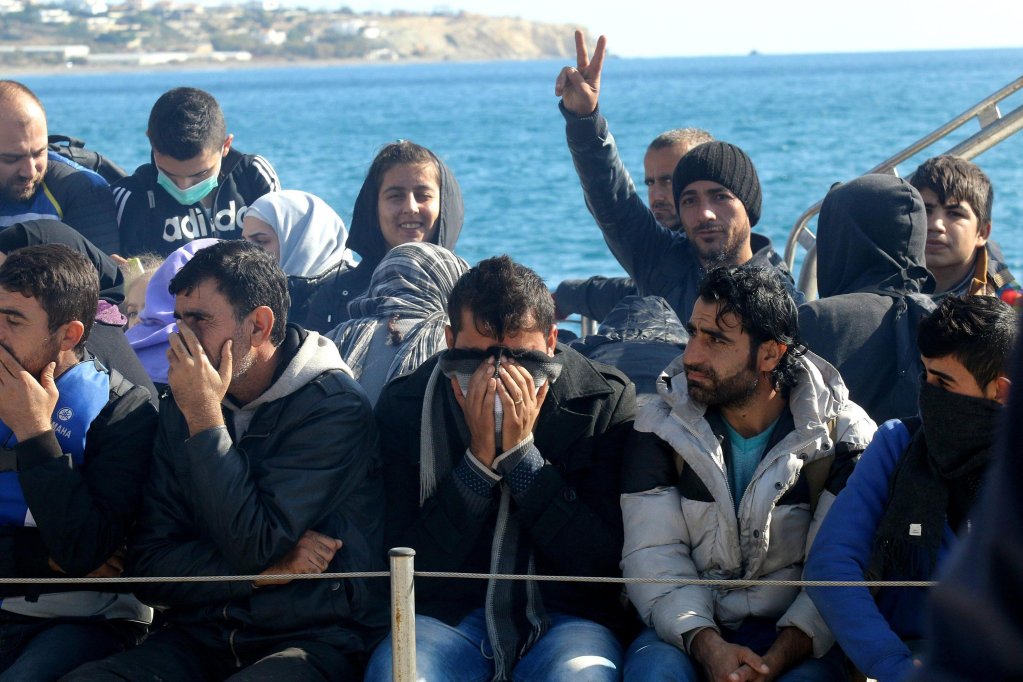
More than 320 migrants have been rescued from the waters around the Greek island of Crete over the past two days, highlighting the growing pressure on Greece’s southern maritime frontier as more boats attempt the journey from North Africa.
Greek public broadcaster ERT reported that 327 migrants were intercepted in Greek territorial waters during a series of operations conducted over 48 hours.
The Greek coastguard said 87 people travelling aboard two separate boats were brought to safety on August 13. The vessels were located approximately 40 kilometres from the port of Kaloi Limenes on the southern coast of Crete.
The previous day, authorities carried out five separate rescue operations involving approximately 240 migrants in waters off southern Crete and the nearby island of Gavdos.
Some of the operations involved surveillance aircraft operated by Frontex, the European Border and Coast Guard Agency, which assists member states in monitoring the EU’s external borders.
The latest rescues come as Crete and Gavdos continue to experience a significant increase in migrant arrivals from the North African coast. The route has emerged as one of the most heavily used maritime pathways into Greece this year.
More than half of Greece’s irregular maritime entries have reportedly occurred along the route involving Crete and Gavdos. The two islands have become particularly important destinations for people attempting to cross the Mediterranean from Libya.
The increase has been particularly noticeable during the summer months, when calmer seas and more favourable weather conditions encourage more people to attempt the crossing.
However, warmer weather does not eliminate the dangers associated with the journey. Migrant boats are frequently overcrowded, poorly equipped and vulnerable to mechanical failure, while the distance between Libya and the Greek islands can leave passengers at sea for more than a day.
Greek coastguard sources cited by the German news agency DPA said dozens of boats were currently believed to be heading towards Crete.
Tobruk in eastern Libya has emerged as a major departure point for many of the vessels. The Libyan port is roughly 300 kilometres south of Crete and Gavdos, although the actual sea journey can take 36 hours or longer depending on the vessel, weather and route taken.
The growing number of departures has increased pressure on Greek authorities, who must coordinate search-and-rescue operations while also processing migrants who successfully reach the islands.
Frontex surveillance flights have been used in several recent operations, reflecting the European Union’s wider efforts to monitor migration routes across the Mediterranean.
The latest movements have also drawn attention to the role of migrant smuggling networks operating from Libya. Smugglers frequently organise crossings using boats that may be unsuitable for long journeys and carry far more passengers than they were designed to accommodate.
Greek Migration Minister Thanos Plevris has warned that a large number of people remain in Libya waiting for an opportunity to travel by sea towards Europe. He has estimated that more than 500,000 people could currently be in the country awaiting a crossing.
The figure illustrates the potential scale of the migration pressure facing Greece if departures from Libya continue to increase.
According to figures from the United Nations High Commissioner for Refugees, more than 10,000 irregular migrants had arrived in Crete since the beginning of the year.
The concentration of arrivals on Crete has created logistical challenges for local authorities and humanitarian organisations, particularly when several boats reach Greek waters within a short period.
The island’s geographical position makes it a natural destination for boats departing from eastern Libya, placing it increasingly at the centre of Greece’s migration response.
For migrants, however, the route remains extremely dangerous. People attempting the crossing can spend more than 36 hours at sea in vessels that may lack sufficient food, water, navigation equipment or life-saving equipment.
The recent rescues demonstrate the continuing risks. While hundreds of people were brought safely to shore during the latest operations, the repeated need for rescue missions underscores the dangers faced by those attempting to reach Europe by sea.
Greek authorities are expected to maintain increased surveillance of the route as the summer migration season continues, while Frontex and other European agencies are likely to remain involved in monitoring movements from the North African coast.
With thousands already reaching Crete this year and reports of dozens of additional boats travelling towards the island, Greece is facing renewed pressure to manage irregular migration while ensuring that people in distress at sea receive assistance.
The developments also underline the broader challenge facing Europe along the central and eastern Mediterranean routes, where conflicts, economic hardship, insecurity and organised smuggling continue to drive people towards dangerous sea crossings in search of safety or better opportunities.