
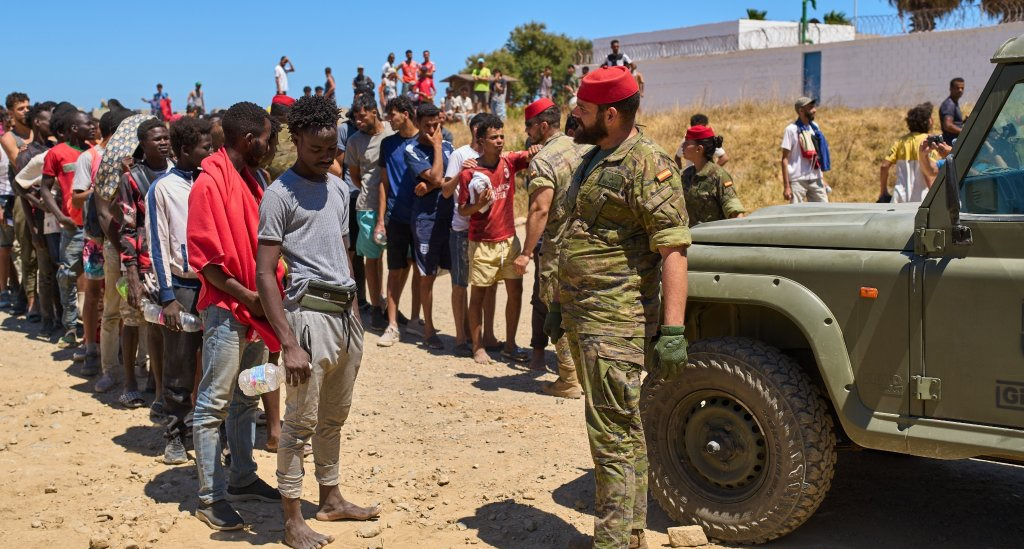
Morocco has attributed last week’s mass migrant crossings into the Spanish enclave of Ceuta to the spread of misleading information on social media and the activities of human trafficking networks, rejecting suggestions that authorities deliberately allowed the unprecedented border breach to occur.
In its first official statement since thousands of migrants crossed into Ceuta, Morocco’s Interior Ministry said the incident resulted from the “malicious exploitation of the digital space” and the circulation of false information that created unrealistic expectations among migrants seeking to enter Europe.
The ministry also cited the role of human trafficking networks and claimed that recent legal developments in Spain, including a court ruling preventing the immediate return of migrants arriving by sea, had been widely misinterpreted online. According to the ministry, these factors combined to create the false impression that migrants could easily enter European Union territory without facing legal consequences.
Speaking on Sunday, Interior Ministry spokesperson Rachid Khalfi said the spread of misleading information had created “an illusion” that irregular entry into Europe could be achieved without repercussions. However, Moroccan authorities did not identify those responsible for disseminating the online misinformation.
Migration analyst Gerald Knaus, director of the European Stability Initiative, said false claims suggesting Spain had opened its borders had circulated widely on social media in the days leading up to the crossings. He noted that similar online messaging had encouraged migrants to head toward Ceuta, while also observing that Moroccan authorities appeared to have made little effort to prevent large groups from reaching the border.
Knaus, who advised on the 2016 EU-Turkey migration agreement, said there had been numerous invitations shared across social media platforms encouraging people to cross into the Spanish enclave. Nevertheless, he cautioned against drawing conclusions about Morocco’s intentions, saying there was insufficient evidence to determine whether authorities had deliberately allowed the crossings to occur.
The latest incident has inevitably drawn comparisons with the 2021 Ceuta migration crisis, when approximately 10,000 migrants entered the enclave after Morocco relaxed border controls during a diplomatic dispute with Spain over Madrid’s decision to provide medical treatment to a leader of the Western Sahara independence movement. Morocco denied at the time that it had intentionally loosened border security, arguing that any lapses resulted from operational pressures during the Ramadan period.
Regarding last week’s events, Knaus said there remained considerable speculation about what had happened but stressed that, while Morocco possesses the capacity to prevent such large-scale crossings, there was not enough evidence to conclude why the authorities had not stopped the movement sooner.
Moroccan officials also disputed casualty and arrival figures released by Spanish authorities. Rabat said 11 people died during the incident and estimated that around 40,000 migrants crossed into Ceuta. Those figures differ significantly from estimates provided by Spanish officials, who reported that between 50,000 and 60,000 migrants entered the enclave and placed the death toll at 72.
The Moroccan government said it was working closely with Spanish authorities to verify the casualty figures and confirmed that prosecutors had opened investigations into several incidents connected to the border crossings.
Spanish authorities have continued returning migrants to Morocco since the crisis began. According to Spanish media reports citing the Interior Ministry, approximately 53,000 migrants had already been returned by the weekend. However, ministry officials later acknowledged they did not have updated figures on how many people remained in Ceuta.
Journalists reporting from the enclave on Monday said hundreds of migrants were still gathered on beaches and in parts of the city centre despite ongoing return operations conducted by Spanish security forces.
The Ceuta crisis has reignited debate across Europe over border security, migration management and cooperation between the European Union and Morocco, with the incident expected to remain high on the agenda during discussions among EU interior ministers on migration policy.