
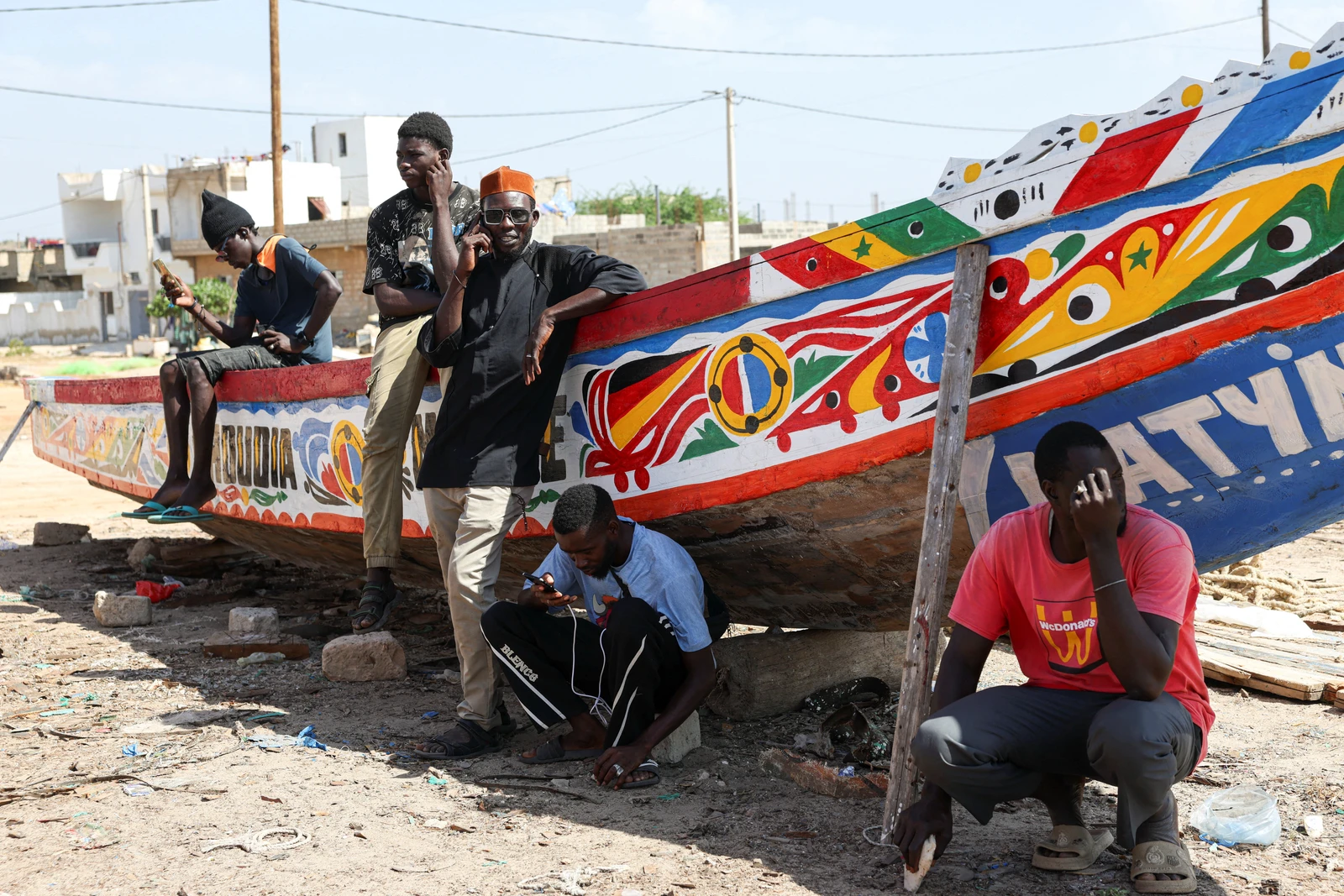
Senegal is facing growing concerns over the rising number of young people disappearing or dying while attempting to reach Spain’s Canary Islands in overcrowded boats crossing the dangerous Atlantic Ocean.
Families in coastal communities are increasingly desperate for news of relatives who have joined the dangerous migration journey, with several boats reported missing or capsized in recent weeks.
In the fishing village of Ngor, near Senegal’s capital, Dakar, residents are mourning the disappearance of a boat carrying dozens of young men who departed on November 9.
The vessel, known locally as a pirogue, was carrying at least 30 young men, many of them fishermen, according to residents. Mechanics and a shopkeeper were also reportedly among those on board.
Mamadou Diallo, whose friend was among the passengers, said families had received no information about the boat or the people travelling in it.
The disappearance has left relatives searching social media platforms and messaging groups for information, hoping to find evidence that their loved ones reached the Canary Islands safely.
Pictures of the missing boat have circulated on WhatsApp as residents share information and appeal for help locating the passengers.
Omar Diop, a member of Boza Fii, an organisation that supports migrants and their families in Senegal, said a reconnaissance aircraft had departed from Las Palmas in Spain’s Canary Islands on Monday to search for the missing vessel. Another search mission was expected to take place on Tuesday.
A Senegalese navy officer also confirmed that several families had contacted the service seeking information about their missing relatives, but authorities had no confirmed answers.
The disappearance is part of a wider pattern of deadly migration journeys from West Africa towards the Canary Islands, where thousands of people attempt to reach Europe in small, overcrowded boats that are poorly equipped for the Atlantic crossing.
At least 43 bodies were recovered after another migrant boat capsized off Thieppe, in northwestern Senegal, on November 6.
In a separate incident near Yenne, south of Dakar, a pirogue reportedly struck rocks and sank, with village officials saying that 10 bodies had been recovered. Authorities had not officially confirmed the reported death toll.
The number of people attempting the journey has increased in recent months, particularly from Senegal and neighbouring Gambia. Spain’s Canary Islands have experienced a growing number of arrivals, with authorities on the island of El Hierro declaring a state of emergency following the arrival of several thousand migrants.
Senegal’s worsening economic conditions and political difficulties are among the factors pushing young people to consider the dangerous journey.
With employment opportunities difficult to find, many young men see reaching Europe as a chance to secure work and provide financial support for their families. Some describe the journey as an adventure despite the serious risks involved.
The Senegalese navy reported on November 11 that more than 1,500 people had been rescued or taken off migrant boats during the preceding two weeks, highlighting the scale of departures and the challenges facing authorities.
The dangerous crossings are also taking place as European countries tighten visa requirements and increase border controls, making regular migration more difficult for many people seeking opportunities abroad.
For families in Senegal’s coastal communities, however, the consequences are increasingly personal. Every missing boat brings renewed uncertainty, as relatives wait for news and fear that their loved ones may never return home.