
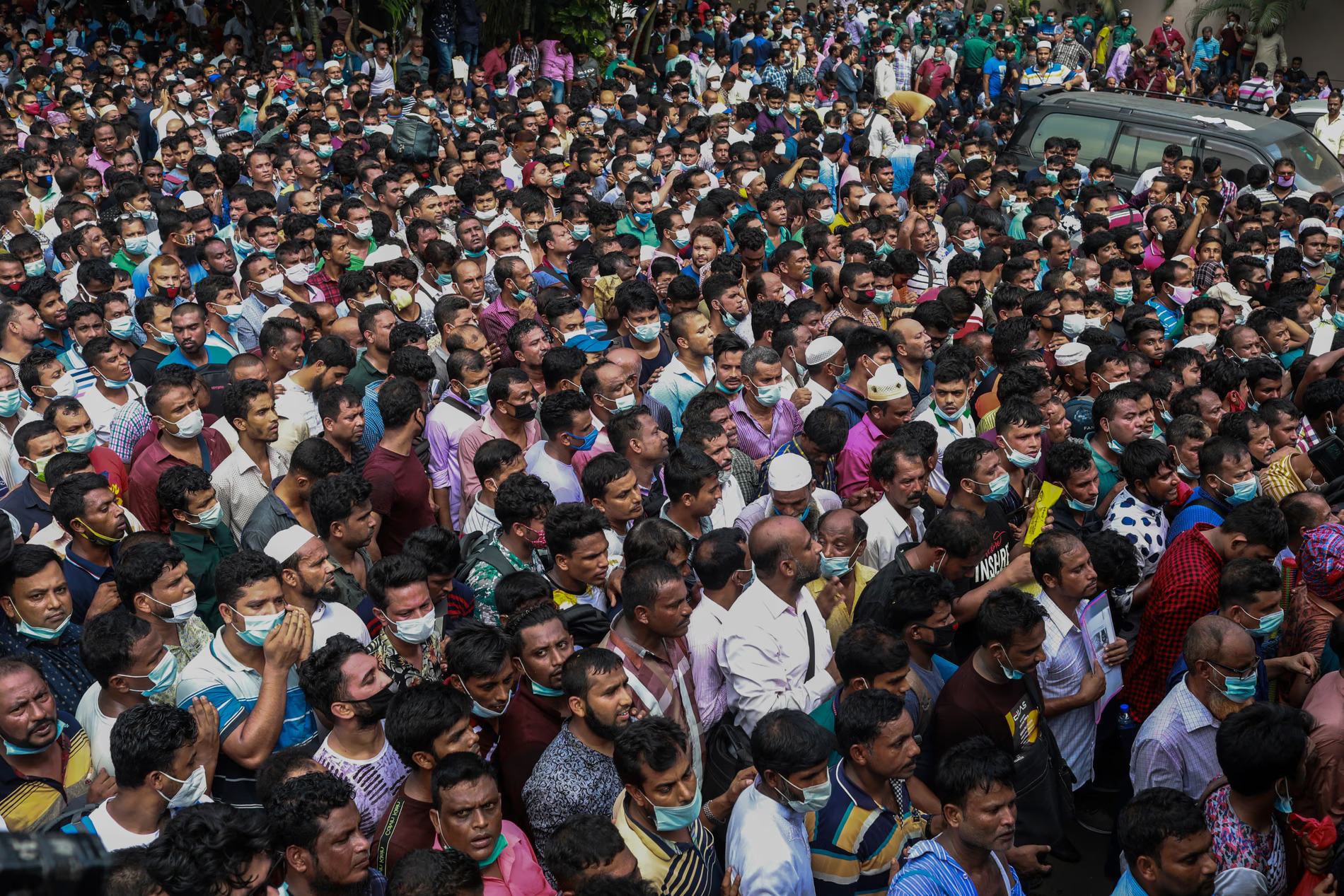
Thousands of migrant workers from Bangladesh are returning to their jobs in Gulf countries despite growing fears caused by the ongoing conflict in the Middle East.
At the international airport in Dhaka, many workers were seen hugging their families and saying emotional goodbyes before boarding flights back to the region where they earn their living.
One of them, 28-year-old Mohammed Sakib, was preparing to return to Saudi Arabia after spending time at home for his wedding. Sakib, who has worked as a cleaner in the country for four years, said he was afraid but had little choice but to go back.
He explained that although the situation in the region is uncertain, migrant workers like him depend on their overseas jobs to support their families. His relatives, including his brother, expressed concern but said the income from abroad remains essential.
Another parent, Safia Khatun, was seen saying goodbye to her 24-year-old son, who was travelling to Saudi Arabia for the first time to work in a hospital. She said working abroad was often the only option for young men in Bangladesh looking for better opportunities.
Around seven million Bangladeshis are currently employed overseas, with the majority working in Gulf countries. Saudi Arabia hosts the largest share of these workers, employing nearly two-thirds of Bangladeshi migrants in the region.
Travel disruptions caused by the conflict have also affected migrant workers. Syed Ariful Islam, who runs a travel agency in Dhaka, said more than 400 flights were cancelled in recent days, leaving thousands of workers waiting to return to their jobs.
As flights slowly resume, many migrants have begun travelling again to the Gulf. Officials from the Bangladesh Ministry of Expatriates’ Welfare and Overseas Employment said they remain in contact with countries hosting Bangladeshi citizens to monitor the situation.
The risks faced by migrant workers were highlighted when a Bangladeshi worker, Mosharraf Hossain, was reportedly killed in an airstrike in Al-Kharj in Saudi Arabia on March 8. His family now faces the difficult task of repaying loans he had taken to secure employment abroad.
Despite the dangers and uncertainty created by the conflict, many migrant workers say they must continue working overseas to support their families and secure a better future.