
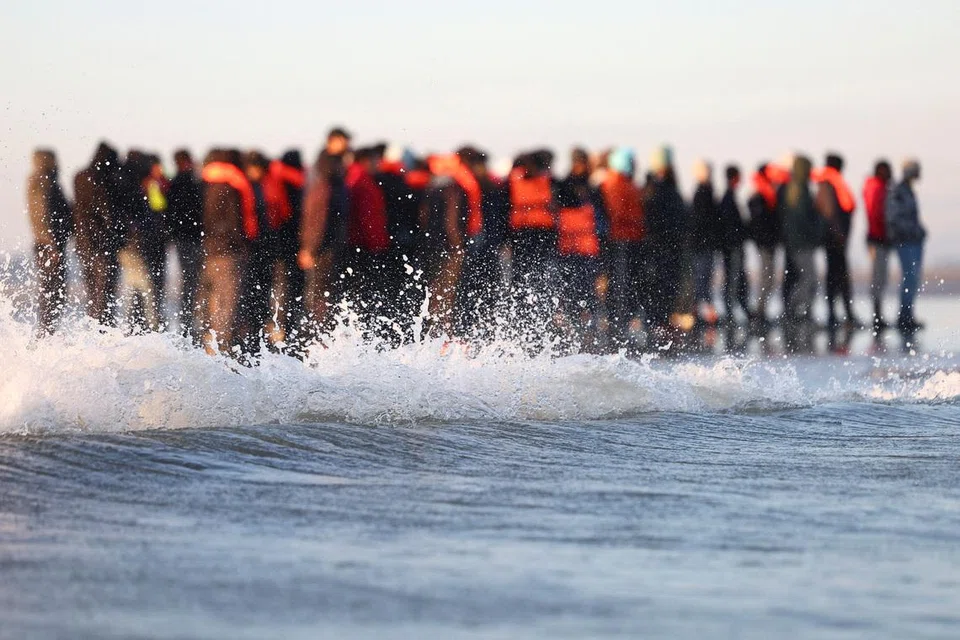
At least four people have died after a small boat carrying migrants sank off the coast of Calais in France, authorities confirmed.
The vessel, described as a “taxi-boat,” was attempting to transport migrants across the English Channel to the United Kingdom when it capsized. Local officials said a search and rescue operation is still ongoing, with the situation continuing to develop.
In recent months, traffickers have increasingly used these so-called taxi-boats — fast-moving dinghies that pick up migrants along different points of the northern French and Belgian coastline — as a new method to avoid detection.
The English Channel remains one of the busiest and most dangerous migration routes in the world. Despite strict border controls, thousands of migrants continue to attempt the crossing each year in search of safety or better opportunities.
Data from the University of Oxford Migration Observatory shows that about 2,200 migrants crossed the Channel in the first two months of 2026 alone. In 2025, around 41,500 people made the journey.
Why are migrants using small boats to cross the Channel?
Migrants often rely on smugglers who use small, overcrowded boats because legal routes are limited, making these risky crossings one of the few options available.
This latest tragedy highlights the ongoing dangers of irregular migration, as more people continue to risk their lives on unsafe journeys across European waters.