
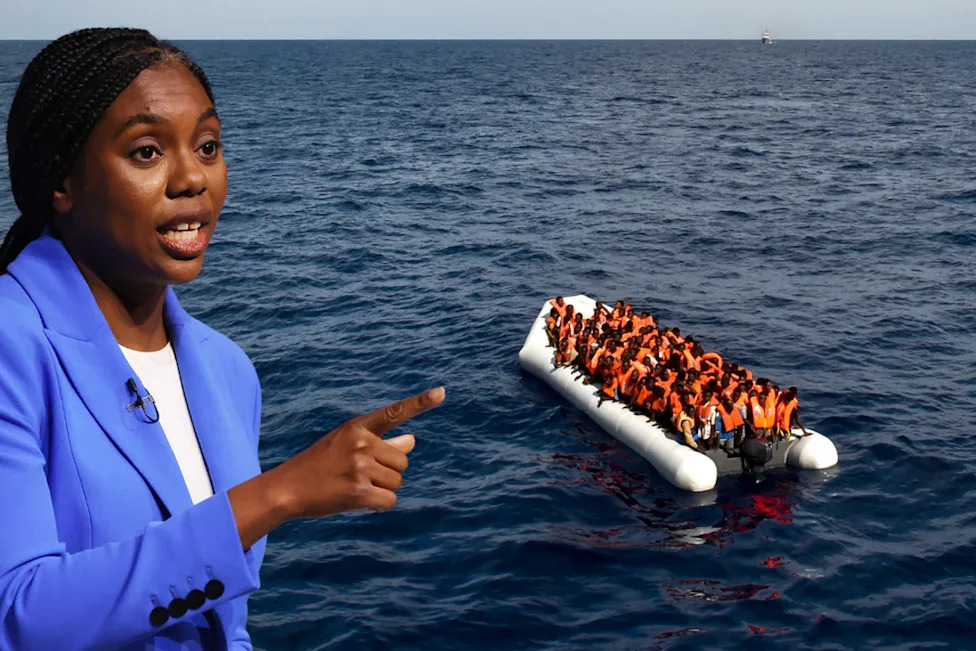
Kemi Badenoch has claimed that many migrants crossing the English Channel illegally into the United Kingdom are “not refugees” but people taking advantage of Britain’s immigration system.
Speaking during an interview with LBC, Badenoch argued that many people arriving by small boats see the UK as a “soft touch.” She said a large number of them should not be in the country and are exploiting the kindness of the British public.
The comments have sparked debate about the reality of asylum claims made by migrants entering the UK through irregular routes. While critics support tougher border controls, others point to official data showing that many of those arriving eventually receive refugee protection.
Research from the Migration Observatory at the University of Oxford suggests that the UK often applies stricter standards to asylum applications compared to several European Union countries. The research indicates that asylum seekers may face a higher threshold when trying to prove their claims in Britain.
Government statistics also show that 61 percent of people who arrived in the UK illegally by small boats and later applied for asylum were ultimately granted refugee status or another form of protection. This means that a majority of applicants were judged by authorities to have valid reasons for seeking safety.
The issue of Channel crossings has remained one of the biggest political debates in the UK in recent years. Thousands of migrants continue to attempt dangerous journeys across the Channel from northern France in small boats, hoping to seek asylum or start a new life in Britain.
Supporters of stricter immigration policies argue that illegal crossings place pressure on public services and weaken border security. However, refugee advocates say many migrants are fleeing war, persecution, political instability, or humanitarian crises in countries across the Middle East, Africa, and Asia.
The debate is expected to continue as immigration remains a major issue in British politics ahead of future elections, with parties divided over how to balance border enforcement, humanitarian obligations, and asylum reform.