
South Africa’s growing debate over migration and xenophobia has led to the return of several foreign nationals to their home countries, including Malawi, Zimbabwe, and Ghana.
The latest group of Malawian migrants arrived home amid increasing concerns about the safety of foreign nationals living in South Africa. The development comes as South African authorities face pressure to address tensions linked to illegal migration and reports of hostility toward migrants.
In a national address on Sunday, Cyril Ramaphosa announced a series of measures aimed at strengthening the country’s response to illegal migration. The South African president said the government would take firm action against unlawful immigration while ensuring that the rule of law is respected.
Ramaphosa also condemned acts of xenophobia and warned citizens against taking matters into their own hands. He stressed that South Africa has no place for xenophobia, racism, sexism, Afrophobia, or any other form of intolerance.
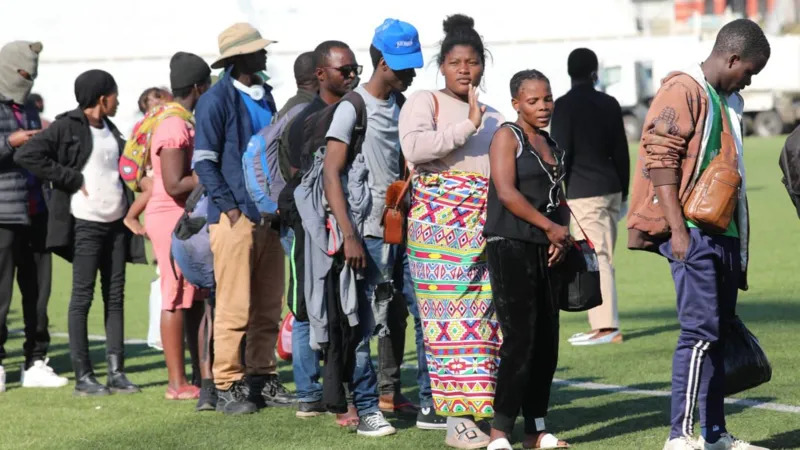
Meanwhile, 74 Zimbabwean nationals returned home on Sunday after leaving Mossel Bay in transport arranged by Zimbabwean authorities. Some families, including those with young children, said they chose to leave the Western Cape because they feared for their safety amid rising tensions.
The concerns have not been limited to Zimbabwean migrants. At the end of May, Ghana organized a repatriation flight from Johannesburg for nearly 300 of its citizens. Over the weekend, another group of about 680 Ghanaians arrived in Accra after leaving South Africa.
The issue has also sparked diplomatic exchanges between South Africa and Ghana. On Saturday, South Africa’s Foreign Minister, Ronald Lamola, criticized comments made by Ghana’s Foreign Minister, Samuel Okudzeto Ablakwa, regarding xenophobia in South Africa.
In a post on X, Lamola described Ablakwa’s remarks as disappointing and accused him of spreading misinformation about conditions in South Africa. The comments followed an interview in which Ablakwa praised the support Ghanaians had shown to fellow citizens returning home.
Ablakwa also referenced reports of attacks on foreigners in South Africa and renewed calls for the African Union to investigate allegations of violence against migrants. The situation continues to highlight concerns over the treatment of foreign nationals and the broader challenges surrounding migration across the region.