
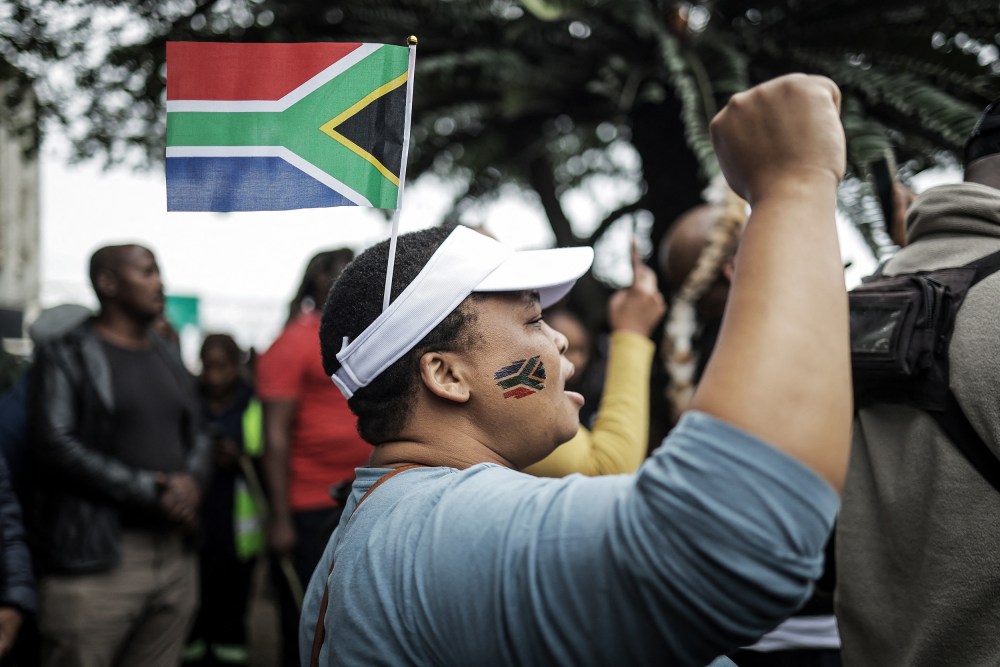
More than 900 people were arrested across South Africa during nationwide anti-migrant protests on Tuesday, according to police, as demonstrations took place in several parts of the country with mostly peaceful outcomes but some incidents of violence and looting.
Deputy National Police Commissioner Tebello Mosikili said authorities monitored about 120 marches across the country. Of these, 108 were peaceful, while police had to intervene in 12 locations where unrest, looting, or other criminal activities occurred.
Mosikili explained that those arrested included undocumented migrants accused of violating immigration laws, as well as individuals detained for public violence, robbery, and harbouring undocumented migrants. Police also deployed additional officers to five of South Africa’s nine provinces overnight to respond to isolated security incidents.
In Johannesburg, soldiers were deployed to the Hillbrow area to support police in maintaining law and order. Security forces had been placed on high alert ahead of the demonstrations following weeks of rising anti-migrant tensions.
The protests were organised to enforce a self-imposed deadline issued by anti-immigration groups demanding that undocumented migrants leave South Africa. The demonstrations followed months of growing hostility toward foreign nationals, during which some migrants were forced to flee their homes while businesses and properties belonging to foreign nationals were vandalised.
Among the leading groups behind the protests are March and March, Operation Dudula, and Progressive Forces. On the eve of the demonstrations, President Cyril Ramaphosa met with leaders of some of the organisations and urged them to ensure that all protests remained peaceful and within the law.
One of the protest leaders, Ngizwe Mchunu, said his group believes illegal immigration has contributed to the spread of illicit drugs and increased competition for small businesses in local communities. He argued that the government should take stronger action to address undocumented migration and prioritise the interests of South African citizens.
However, human rights organisations strongly disagreed with those claims. Amnesty International South Africa said migrants, refugees, and asylum seekers are being unfairly blamed for challenges such as unemployment, poverty, and pressure on public services. The organisation argued that these problems are rooted in the country’s history of apartheid, ongoing economic inequality, and weaknesses in the asylum and immigration system.
The nationwide protests have attracted international attention as concerns grow over the safety of foreign nationals living in South Africa. Authorities have pledged to continue enforcing the law while protecting both citizens and migrants from violence, as the country seeks to address growing tensions surrounding immigration.