
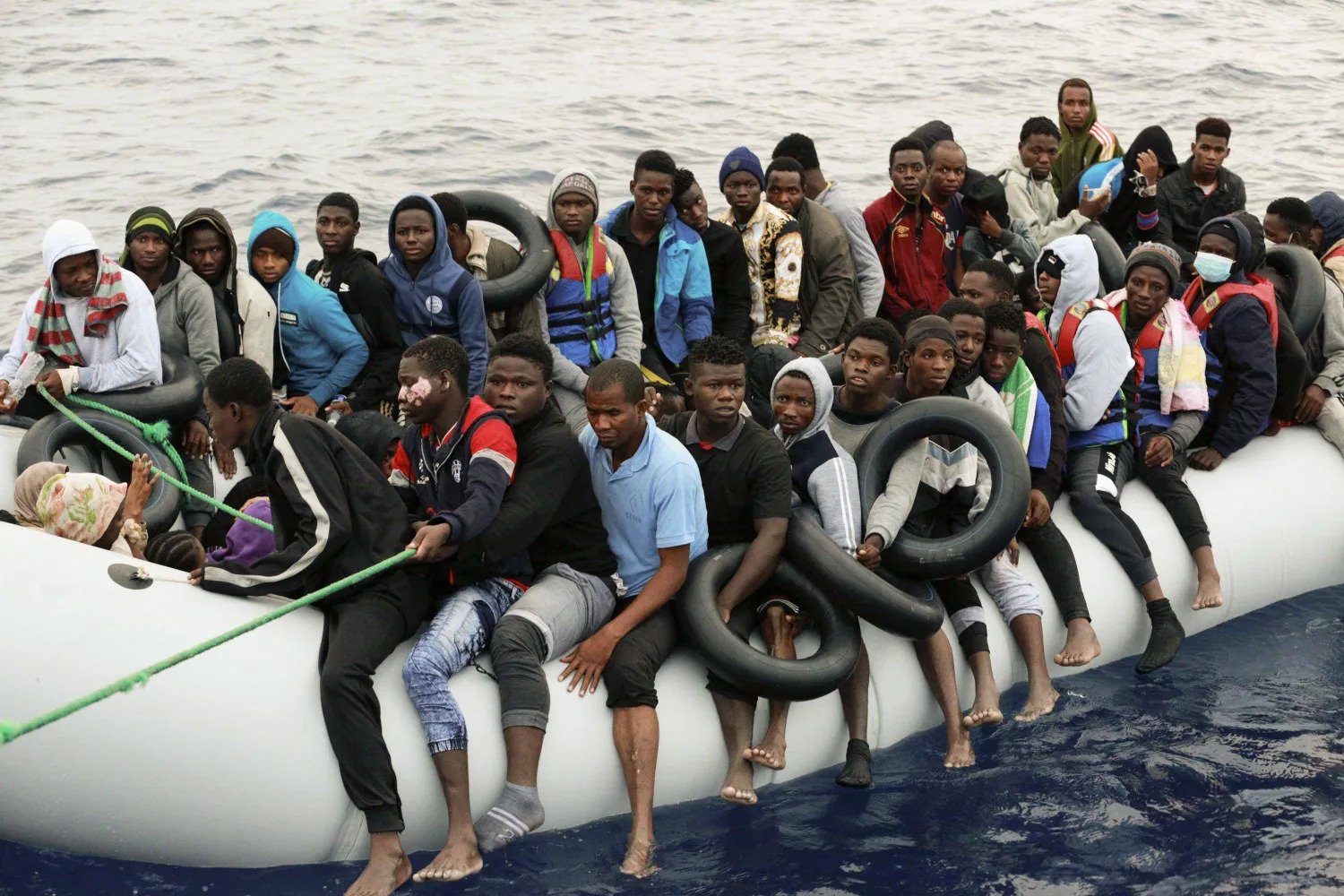
At least seven migrants have died, and around 50 others have been rescued after a migrant boat encountered difficulties off the coast of Libya, highlighting the continuing dangers faced by people attempting to cross the Mediterranean towards Europe.
The incident adds to a growing number of deadly and dangerous sea journeys from North Africa, where migrants and asylum seekers continue to rely on overcrowded and often unseaworthy boats operated by trafficking networks.
The deaths occurred during an attempted sea crossing from Libya, although further details about the circumstances of the incident, including the identities and nationalities of those who died, were not immediately available.
Rescuers managed to save approximately 50 people from the vessel, preventing an even higher death toll.
Libya remains one of the principal departure points for migrants attempting to reach Europe by sea. Thousands of people pass through the country each year in the hope of reaching European shores, particularly Italy and Malta.
Many migrants travelling through Libya face significant risks before they even reach the Mediterranean. Human rights organisations have repeatedly documented reports of detention, exploitation, trafficking, abuse and other forms of mistreatment affecting migrants in the country.
The Mediterranean crossing itself presents another major danger.
Smugglers frequently use overcrowded vessels that are poorly equipped for long journeys. Boats can become unstable or run out of fuel, while passengers are vulnerable to extreme weather, dehydration and drowning.
The latest deaths underscore the persistent humanitarian risks along the central Mediterranean migration route despite continued efforts by European and North African authorities to prevent irregular crossings.
Libyan authorities and European countries have increased cooperation on border control and efforts to disrupt migrant-smuggling networks. However, the continued departure of boats demonstrates the difficulty of stopping people from attempting the journey.
For migrants who have already travelled across the Sahara and reached Libya, the sea crossing is often viewed as their route towards safety or better economic opportunities in Europe.
The deaths also come amid renewed scrutiny of Europe’s migration policies and its cooperation with countries in North Africa to reduce irregular arrivals.
International organisations have repeatedly called for greater investment in safe and legal pathways for migration and asylum, arguing that enforcement measures alone cannot eliminate dangerous crossings.
The latest incident serves as another reminder that migrants continue to risk their lives at sea despite the possibility of interception, detention, or death.