
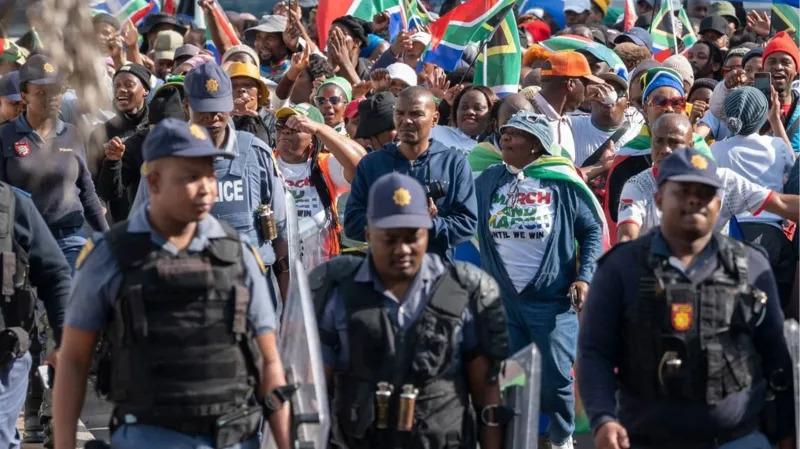
South African police have launched a murder investigation into the killing of Andile Mvuyelwa Somgxada, a provincial leader of the anti-migrant March and March movement, amid heightened tensions over immigration and ongoing nationwide protests.
Somgxada, who led the group’s activities in Gauteng Province, was shot outside his home earlier this month and died several days later in hospital, according to police.
Acting police chief Puleng Dimpane said a multidisciplinary investigative team had been assigned to the case, underscoring the seriousness with which authorities are treating the killing.
“We are committed to conducting a thorough investigation to establish the circumstances surrounding this murder and to ensure accountability,” Dimpane said in a statement.
The investigation comes as immigration has become one of South Africa’s most contentious political issues, with growing public debate over undocumented migration and border enforcement.
The March and March movement has organised demonstrations calling for stricter immigration controls and the removal of undocumented migrants. The group argues that illegal migration places pressure on public services, employment opportunities and public safety.
The movement had set an unofficial June 30 deadline for undocumented migrants to leave South Africa. Since then, weekly demonstrations have continued in several communities, with some protests reportedly accompanied by violence, intimidation and incidents of looting.
The South African government has simultaneously intensified immigration enforcement through its nationwide “migration management” campaign.
Officials say more than 53,000 foreign nationals have been deported or repatriated during the past five weeks as authorities seek to strengthen immigration enforcement while maintaining public order.
President Cyril Ramaphosa has previously condemned vigilante action against migrants, insisting that immigration laws must be enforced by state authorities rather than private groups.
South Africa has experienced recurring outbreaks of xenophobic violence over the past two decades. As Africa’s most industrialised economy, it continues to attract migrants from across the continent seeking employment and better economic opportunities, making immigration one of the country’s most sensitive political and social issues.