
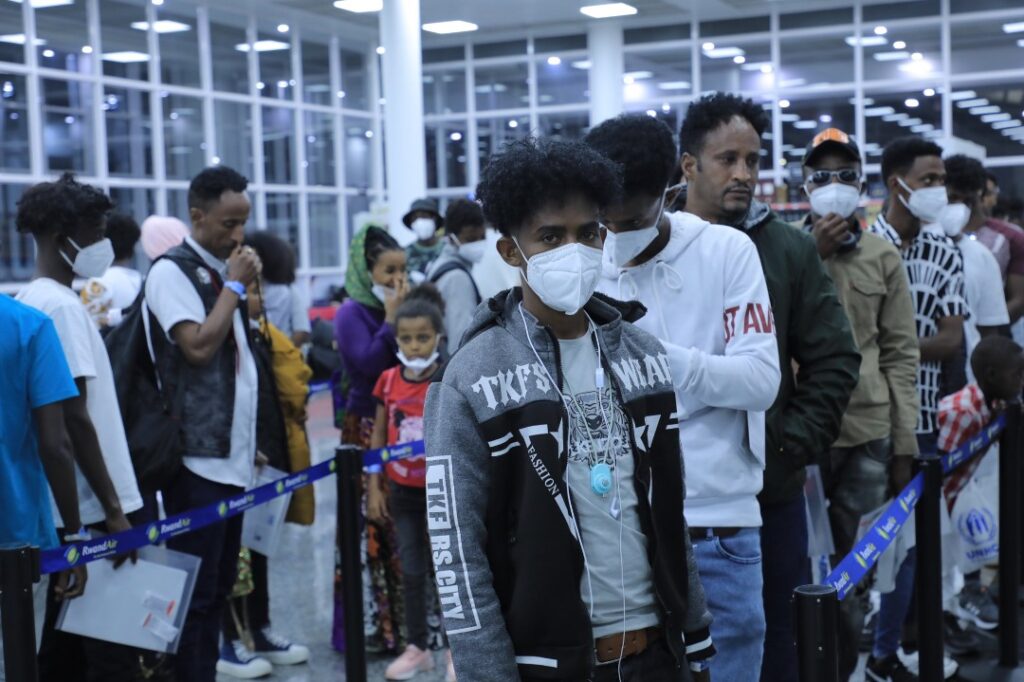
Rwanda has confirmed that it is in discussions with Italy over a possible arrangement to host migrants seeking asylum in the European Union, days after Rome proposed creating a network of migrant centres outside the bloc.
Rwandan government spokesperson Yolande Makolo said the talks with Italy were ongoing but stressed that no agreement had been reached.
“We are still in discussions,” Makolo said during an interview with Rwanda’s Royal FM radio.
One proposal under consideration could involve expanding an existing Rwandan programme that provides temporary accommodation for migrants evacuated from Libya. The programme operates from a transit centre in southern Rwanda and provides asylum seekers with medical care and other support while their cases are assessed.
The initiative was established in 2019 in cooperation with the African Union and the United Nations refugee agency. People hosted through the programme can eventually return to their countries of origin or be resettled in another country, depending on the outcome of their cases.
The discussions come shortly after Italy called on the European Union to establish so-called “return hubs” in countries outside the bloc. Rome wants these facilities to accommodate foreign nationals who enter EU territory without authorisation while their immigration or asylum cases are processed.
Italy presented the proposal during an emergency meeting of EU interior ministers on Tuesday, held amid growing tensions over migration following the arrival of tens of thousands of people in Spain’s North African enclave of Ceuta from Morocco.
The Italian government has increasingly supported processing and managing migration outside EU territory. Rome already operates migrant centres in Albania, where people seeking asylum in Italy can have their claims processed.
Under Italy’s latest proposal, similar facilities could be established in other countries outside the EU and financed by the European Union, with participating member states sharing responsibility for their operation.
Rwanda is among the countries being considered, alongside Uganda and Ghana.
The potential Italian-Rwandan arrangement would build on Kigali’s previous experience with controversial migration agreements involving Western governments.
In 2022, Rwanda reached an agreement with the United Kingdom to accept asylum seekers transferred from Britain. The scheme faced prolonged legal and political opposition and was eventually abandoned after the UK’s government changed in 2024.
The collapse of that agreement later triggered a financial dispute between Rwanda and Britain. Kigali sought compensation over money it said remained outstanding under the abandoned arrangement, but an international arbitration panel in The Hague rejected Rwanda’s claim in June 2026.
Rwanda has also reached a separate agreement with the United States to temporarily receive people deported from America. The deal, signed in August 2025, allows Rwanda to host up to 250 deportees and reportedly includes financial support from Washington.
Italy’s discussions with Rwanda reflect a broader European effort to shift aspects of migration management outside the EU. Supporters argue that external processing and return centres could discourage dangerous irregular journeys and make it easier to remove people who are not eligible to remain in Europe.
However, the approach is likely to face scrutiny from humanitarian organisations and refugee advocates, particularly over safeguards for asylum seekers and whether third-country facilities can guarantee adequate protection and access to fair asylum procedures.
For Rwanda, the talks could further expand its role in international migration management, while for Italy, an agreement would strengthen Rome’s push for EU-backed migration processing arrangements beyond Europe’s borders.