
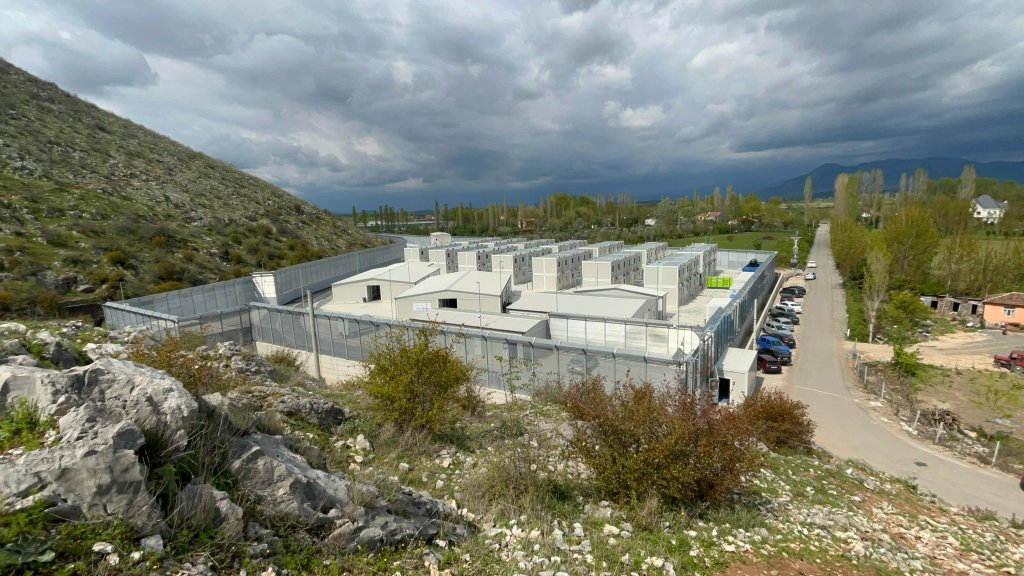
Albanian Prime Minister Edi Rama has ruled out hosting new migrant return centres for other European Union countries, saying facilities in third countries alone cannot solve the bloc’s migration challenges.
Rama made the comments in an interview with German newspaper Welt am Sonntag, according to reports published this week. He said Albania would not accept requests from other EU countries to establish additional return hubs on its territory.
The prime minister said Albania’s existing agreement with Italy was different because of the close relationship between the two countries. Under the 2024 arrangement, Italy established migrant processing facilities in Albania for people rescued or intercepted at sea.
Rama said he had accepted that agreement because Italy was a particularly close partner, but rejected the idea of extending similar arrangements to other EU governments.
“Centres in third countries alone are not the solution,” Rama said, according to the reports.
His position comes shortly after EU countries formally adopted new rules allowing member states to establish return hubs in non-EU countries. The EU Council gave final approval to the Return Regulation on October 1.
Under the new rules, people who have no legal right to remain in the EU and have received a return decision may be transferred to a return hub in a non-EU country if the member state has an agreement or arrangement with that country.
The EU says any such agreement must involve a country that respects international human rights standards and international law, including the principle of non-refoulement, which prohibits returning people to places where they could face persecution or serious harm. Unaccompanied minors are excluded from these arrangements.
The policy is intended to improve the EU’s ability to enforce return decisions. The European Commission has said that returns remain a major challenge, with many people ordered to leave the bloc failing to actually depart.
Several EU countries are now exploring possible locations for return hubs. Germany, Austria, Greece, Denmark and the Netherlands have been working together on the initiative, while Rwanda and Uganda have emerged as possible locations.
The proposals have faced criticism from human rights organisations and some politicians, who have raised concerns about detention conditions, legal safeguards and the practical and financial difficulties of transferring migrants to countries outside Europe.
Albania’s decision is also significant because the country is seeking EU membership. Albania has continued to advance its accession process, including closing several negotiating chapters in 2026.
The Italian facilities in Albania have themselves attracted criticism and have remained largely underused, according to the source report. Rama’s latest comments indicate that Tirana does not want the Italian arrangement to become a model for similar agreements with other EU countries.
The EU’s new return framework nevertheless gives member states a legal basis to negotiate such arrangements with third countries, provided the required human rights safeguards are met.