
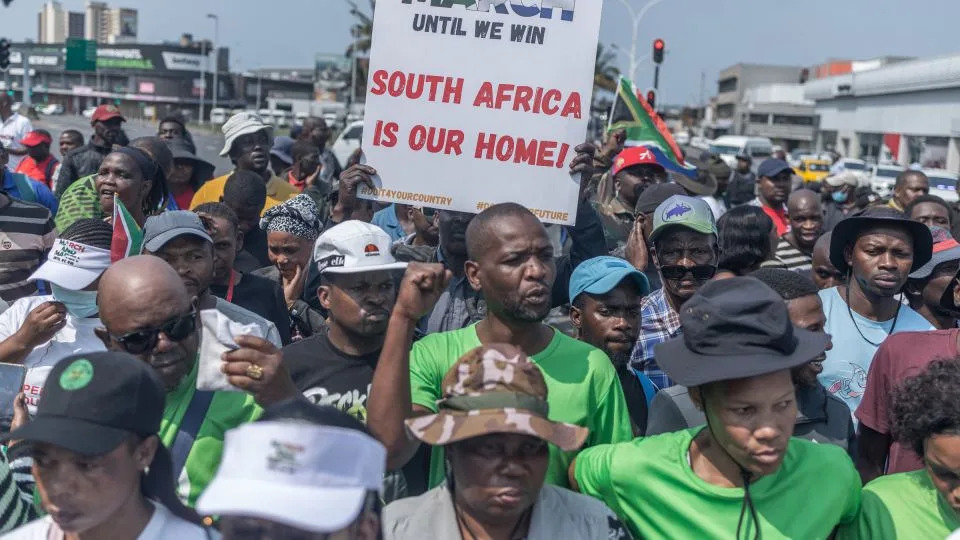
Protesters in South Africa have called on the government to ban Nigerians from entering the country, accusing Nigerian nationals of contributing to drug trafficking and other social problems.
The demonstration, organised by the anti-immigrant group March and March, took place in Pretoria on Wednesday as tensions over foreign nationals and immigration continued to rise.
The protesters demanded stricter immigration controls, the removal of undocumented foreigners and a ban on Nigerians entering South Africa.
The group’s leader, Jacinta Ngobese-Zuma, singled out Nigerians living in Sunnyside, a Pretoria suburb popularly known as “Little Lagos”, challenging them to explain their presence in the area.
She questioned why the neighbourhood had been given a Nigerian identity and called on Nigerians living there to engage directly with the protesters.
The group’s legal representative, Xolani Zuma, went further, urging the South African government to prohibit Nigerians from entering the country until what he described as drug-related activities stopped.
He claimed that Nigerians were involved in selling drugs to South Africans, arguing that the government should take action against Nigerian nationals while maintaining relations with other African countries.
The demonstrators also called for South Africa to withdraw from the 1951 United Nations Refugee Convention, claiming that migrants place additional pressure on the country’s public resources.
The protest comes amid growing diplomatic tensions between Nigeria and South Africa over repeated xenophobic attacks and concerns about the safety of foreign nationals.
The Nigerian government has expressed concern over the treatment of its citizens in South Africa, while reports indicate that more than 1,500 Nigerians have been repatriated from the country this year.
Nigeria’s newly appointed High Commissioner to South Africa, Femi Fani-Kayode, has described individuals involved in xenophobic attacks as a “tiny minority”, stressing that their actions should not be taken as representative of the wider South African population.
South African authorities have also warned against intimidation and violence, maintaining that concerns about immigration must be addressed through lawful procedures rather than hostility towards foreign nationals.
The latest demonstration has added to concerns about the growing hostility facing Nigerian and other African migrants in South Africa, raising fresh questions about their safety, freedom of movement and right to live and work in the country.