
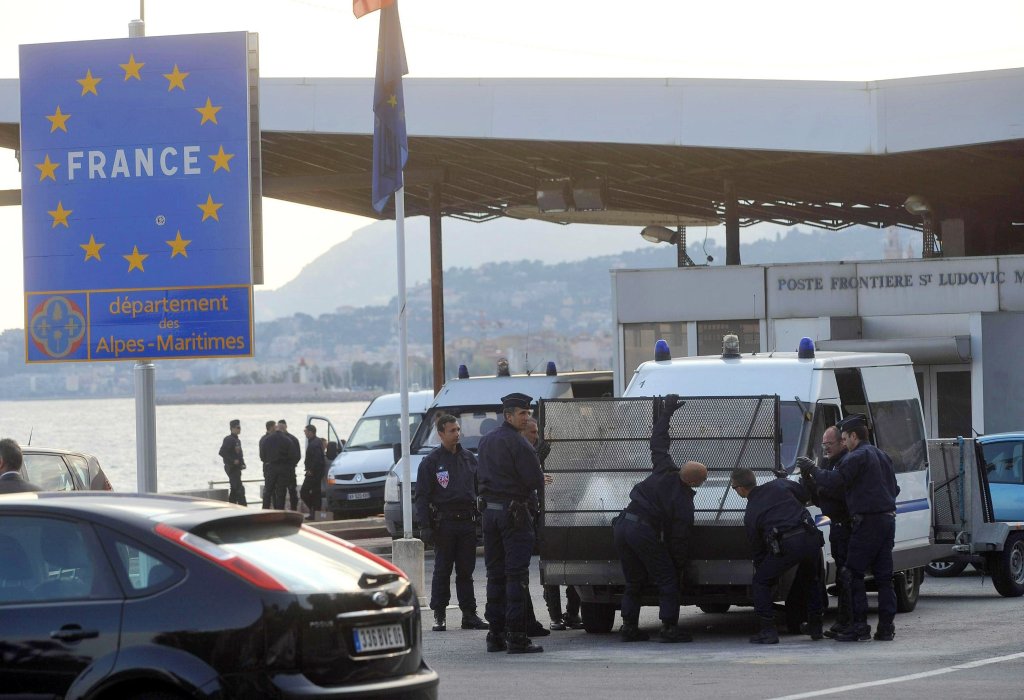
French courts have overturned several government orders authorising police drone surveillance along parts of the France-Italy border, ruling that some of the monitoring measures imposed unnecessary and disproportionate restrictions on people’s privacy.
The decisions, issued on October 30, 2026, followed legal challenges brought by human rights and migrant support organisations against decrees issued by the Alpes-Maritimes prefecture. The police have been using drones to monitor the border since May 2023 to identify migrants attempting to enter France irregularly from Italy.
The 117-kilometre border between the two countries includes mountains, cliffs, ravines, waterways and dangerous walking paths. Migrants attempting to avoid police detection increasingly use remote routes to cross on foot.
One such route, known as the “Death Pass”, runs along cliffs overlooking the A8 motorway and the town of Menton. Migrants using these paths face serious risks, while others are reportedly dropped off by smugglers near major roads and sometimes attempt to cross busy traffic routes.
French border police officials say the difficult terrain makes it challenging to monitor the entire border using ground patrols alone. Commissioner Guillaume Armand, who oversees operations against irregular immigration along the border, has highlighted the dangers migrants face when attempting to cross through these areas.
Since the introduction of drone surveillance in May 2023, French police have used camera-equipped aircraft to identify people crossing outside authorised border points and direct officers to their locations.
The system has contributed to numerous interceptions. According to figures reported by France 3 Provence-Alpes-Côte d’Azur, approximately 1,500 migrants were intercepted with the assistance of drones in 2025.
The figure represents part of the estimated 15,000 migrants intercepted across the Alpes-Maritimes department that year. Authorities estimate that people crossing on foot account for between 10 and 12 per cent of all interceptions.
French authorities have defended the use of drones, arguing that the region’s difficult geography and numerous alternative crossing routes make aerial surveillance necessary to support border police operations.
However, the surveillance measures have faced opposition from organisations concerned about privacy and the impact of continuous monitoring on residents and people travelling through the border region.
The League of Human Rights (LDH), the National Association for Border Assistance to Foreigners (Anafé), and Emmaüs Roya co-founders Marion Gachet and Cédric Herrou challenged several prefectural decrees authorising drone flights.
The organisations argued that the orders allowed surveillance across excessively large geographical areas and without adequate time restrictions, creating disproportionate interference with people’s right to privacy.
On October 30, the Nice Administrative Court annulled two decrees issued in February 2025 covering parts of the border region.
The court did not reject the general need for border surveillance. It acknowledged that irregular crossings remained at a high level despite the reintroduction of border controls in 2015.
However, it found that the surveillance authorised under the two contested decrees was unnecessary and disproportionate because the designated areas included authorised crossing points, including Olivetta and Fanghetto, as well as railway stations in Sospel and Breil-sur-Roya.
The court nevertheless rejected a separate challenge concerning drone surveillance around Menton. It considered that the number of border police officers available was insufficient to monitor both official crossing points and alternative routes, including the dangerous Death Pass.
Following the decisions, the Alpes-Maritimes prefecture maintained that drones remained an important part of the equipment used by its Border Force 06 unit. It said their use would continue in accordance with existing legal requirements.
The rulings place limits on how French authorities can use aerial surveillance along parts of the border, while leaving some drone operations in place. They also highlight the continuing debate between border security measures and the protection of privacy and fundamental rights in areas affected by irregular migration.