
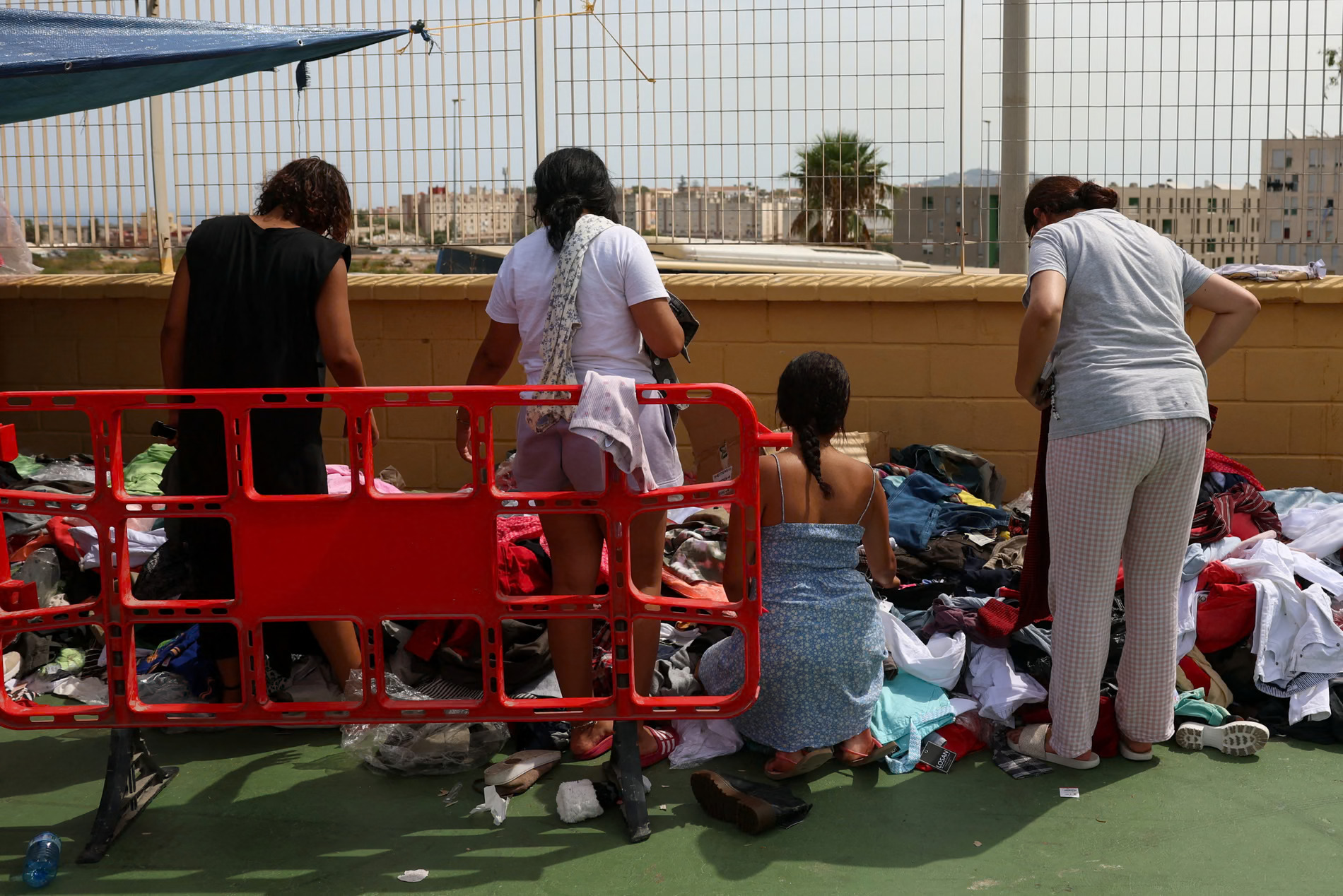
France’s High Council for Equality between Women and Men has urged the government and European authorities to place the safety of migrant women and girls at the centre of migration policies, warning that gender-based violence experienced throughout their migration journeys is frequently overlooked.
The call was made in a report published on Tuesday, November 24, ahead of the International Day for the Elimination of Violence against Women on November 25.
The High Council for Equality between Women and Men (HCE) said migrant women remain largely forgotten in discussions about violence against women, despite facing repeated abuse in their countries of origin, during transit and after reaching their destinations.
According to the report, migration journeys expose women and girls to multiple forms of gender-based violence, including sexual exploitation, rape, human trafficking and abuse in detention facilities.
The council warned that these experiences often accumulate throughout the migration process but receive insufficient attention because migration policies tend to prioritise immigration control over the protection needs of vulnerable women.
The report estimated that the risk of experiencing gender-based violence reaches 70 per cent among women affected by conflict, disasters and forced displacement. It also cited estimates suggesting that 90 per cent of women in exile have experienced some form of violence during their journeys.
Women travelling through transit countries face particularly serious risks. Some are recruited into prostitution networks and subjected to psychological abuse and exploitation. Others experience sexual violence in detention facilities, sometimes resulting in unwanted pregnancies.
The HCE also raised concerns about the treatment of survivors during asylum procedures. It said violence experienced along migration routes is often overlooked when authorities assess protection claims, as the process tends to focus primarily on persecution in the applicant’s country of origin.
The council argued that violence against migrant women should be treated as a central migration policy concern rather than a secondary issue.
To address the problem, it recommended that the European Commission systematically assess the impact of migration policies on women and publish regular findings to help improve protection measures.
It also called for easier access to asylum and residence permits in France, increased development assistance and continued financial support for organisations working to advance women’s rights.
One of its key recommendations is to grant foreign women who have experienced gender-based or sexual violence a renewable one-year temporary residence permit that would allow them to work.
The recommendations come amid concerns about the difficulties undocumented migrant women face when reporting abuse and seeking protection in France.
In October, the French parliament rejected a proposal that would have prevented authorities from issuing deportation orders against undocumented migrants who had experienced sexual violence and filed a complaint.
Social workers supporting migrant women say insecure immigration status can make survivors particularly vulnerable because they may fear deportation if they report their abusers.
At the Maison des Femmes network, which works with public hospitals to support women experiencing violence, social worker Ivonne Rocha-Osuna said many migrant women face severe insecurity and isolation.
She explained that women struggling to find food and accommodation often prioritise their immediate survival over reporting abuse or seeking justice.
One woman supported by the organisation, identified as Violet, experienced female genital mutilation at the age of nine and was later forced into prostitution. She fled East Africa through a smuggling network, where she was also sexually exploited as a way of financing her journey.
Violet now works for a cleaning company and lives with her partner and three children. However, she says her partner is jealous and controlling. She is also studying for a healthcare qualification while worrying about whether her temporary residence permit will be renewed.
Her situation illustrates how violence and insecurity can continue even after migrant women reach their destination countries.
Rocha-Osuna said survivors who have experienced repeated trauma may develop a high tolerance for abuse, making it harder for support organisations to identify their needs.
Marine Muscat-Orbach, a midwife and manager at the Clamart branch of Maison des Femmes, said approximately 40 per cent of the women supported at the centre are foreigners.
She warned that some abusers exploit women’s insecure immigration status to maintain control, including by confiscating their residence permits.
Others reportedly threaten migrant mothers with the possibility of losing their children if they report violence to the authorities, falsely suggesting that their foreign status could lead to their children being taken away.
The HCE’s recommendations highlight the need for migration policies that recognize the specific protection challenges faced by women and girls, including those who have experienced violence before leaving their countries, during transit or after arriving in Europe.