
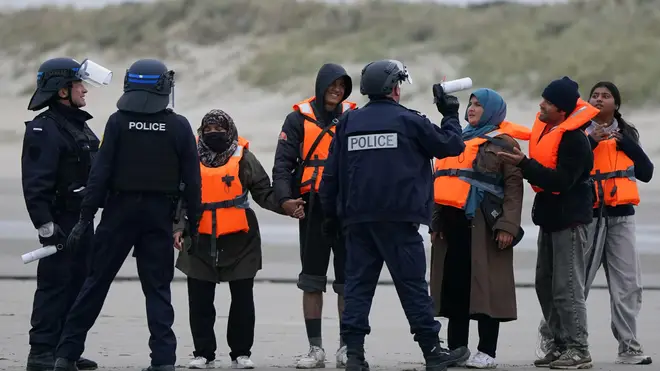
On Friday morning, French police used pepper spray to try to prevent a group of migrants from boarding a boat bound for the United Kingdom, in a fresh episode highlighting the ongoing migrant crisis at the English Channel.
Around 100 men and women gathered on Gravelines beach in northern France, attempting to reach a small dinghy to make the perilous crossing to Dover. As the group moved toward the water, French officers confronted them. In an effort to stop the attempt, police deployed pepper spray. Despite the intervention, at least 70 people succeeded in boarding the boat and were photographed departing across the channel.
This incident comes amid a surge in small boat crossings. Earlier in the week, over a thousand migrants successfully reached the UK in similar attempts. Such crossings have prompted intense debate in both countries about the risks to migrants’ lives and the pressure on border controls.
The confrontation in Gravelines follows a new phase in the UK’s immigration enforcement strategy. Last week, nineteen migrants were deported to France under the Government’s “one in, one out” returns deal. Home Secretary Shabana Mahmood emphasized that flights to France are “under way and ramping up,” signalling that Britain is intensifying measures to deter illegal channel crossings.
Mahmood stated: “If you come here illegally, you face being detained and removed, so think twice before making that journey.” She highlighted that, in contrast to the previous government’s Rwanda migration scheme — which took years and cost hundreds of millions of pounds without forcing a single removal — the current approach had already returned 26 migrants within weeks.
The “returns deal” with France is central to the UK government’s strategy. It aims to break the cycle of dangerous crossings that not only threaten lives but also fuel criminal smuggling networks. Deportations are part of a wider attempt to signal to potential migrants that crossing the Channel without authorisation will result in removal.
The latest incident shows the intensifying challenge for French and British authorities in managing migrant crossings. It also highlights growing tensions over border control strategies, the safety of migrants, and the political implications of the Channel crisis in both countries.