
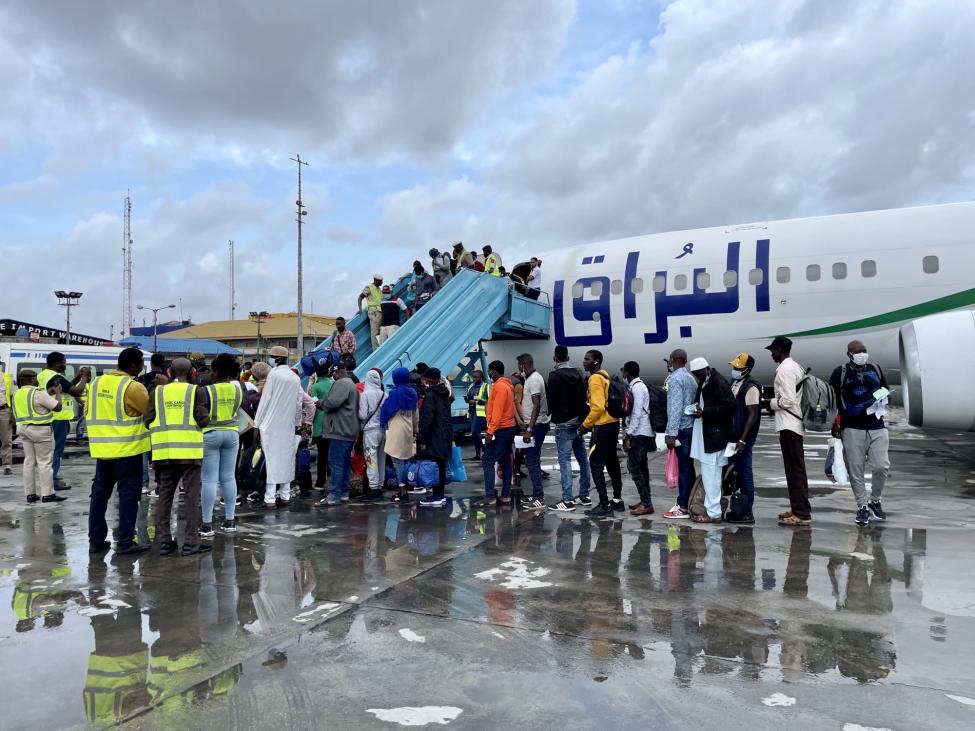
The International Organization for Migration (IOM) has assisted more than 67,000 stranded Nigerian migrants to return home safely since 2017 through its Assisted Voluntary Return and Reintegration programme.
The update was shared by Fatima Adeyemi, IOM Project Assistant on Awareness Raising, during a three-day migration reporting workshop held in Lagos. The training, themed “From Headlines to Impact: A Capacity Building on Ethical and Data-driven Migration Reporting in Nigeria,” was organized to improve journalists’ understanding of migration issues and responsible reporting.
According to Adeyemi, the IOM remains committed to finding solutions to displacement and supporting vulnerable migrants. She revealed that in addition to helping over 67,000 stranded Nigerians return home, the organization has also provided psychological, social, and economic support to more than 30,000 returnees.
She explained that the reintegration support is designed to help returning migrants rebuild their lives and successfully reintegrate into their communities. The assistance includes mental health support, livelihood opportunities, and other services aimed at improving their long-term well-being.
Adeyemi said the IOM works closely with governments and partners to save lives, support safe migration, and promote legal migration pathways. In southern Nigeria, the organization focuses heavily on migration management and facilitating safe and orderly migration processes.
She also highlighted IOM’s collaboration with the Economic Community of West African States, Economic Community of West African States, to promote legal migration and ensure that migration-related issues are handled in accordance with established regulations.
As part of its awareness campaigns, the IOM is working with government secondary schools, unity schools, military schools, and institutions located near border communities. The goal is to educate young people about the dangers of irregular migration before they become vulnerable to misinformation and trafficking networks.
Adeyemi noted that the organization is teaching students about safe migration practices and informing them about legal pathways available to those seeking opportunities abroad. She stressed that early awareness is important in preventing illegal migration and protecting young people from exploitation.
She also encouraged Nigerians to make use of the Migration Resource Centre located within the Federal Ministry of Labour and Employment. The centre provides information to potential migrants, verifies migration opportunities, and helps people make informed decisions before travelling abroad.
According to Adeyemi, many Nigerians are still unaware of the services available through the IOM. She called on the media to play a stronger role in raising awareness and helping more people access accurate migration information.
The IOM is also partnering with the National Commission for Refugees Migrants and Internally Displaced Persons to develop a national referral mechanism for stranded migrants. This system is expected to improve coordination and ensure that Nigerians facing difficulties abroad can access support more quickly.
She advised stranded Nigerians overseas to contact the nearest IOM office or a Nigerian embassy for assistance. The organization’s primary focus, she said, is to ensure the safe return of migrants and provide the support needed for successful reintegration into society.