
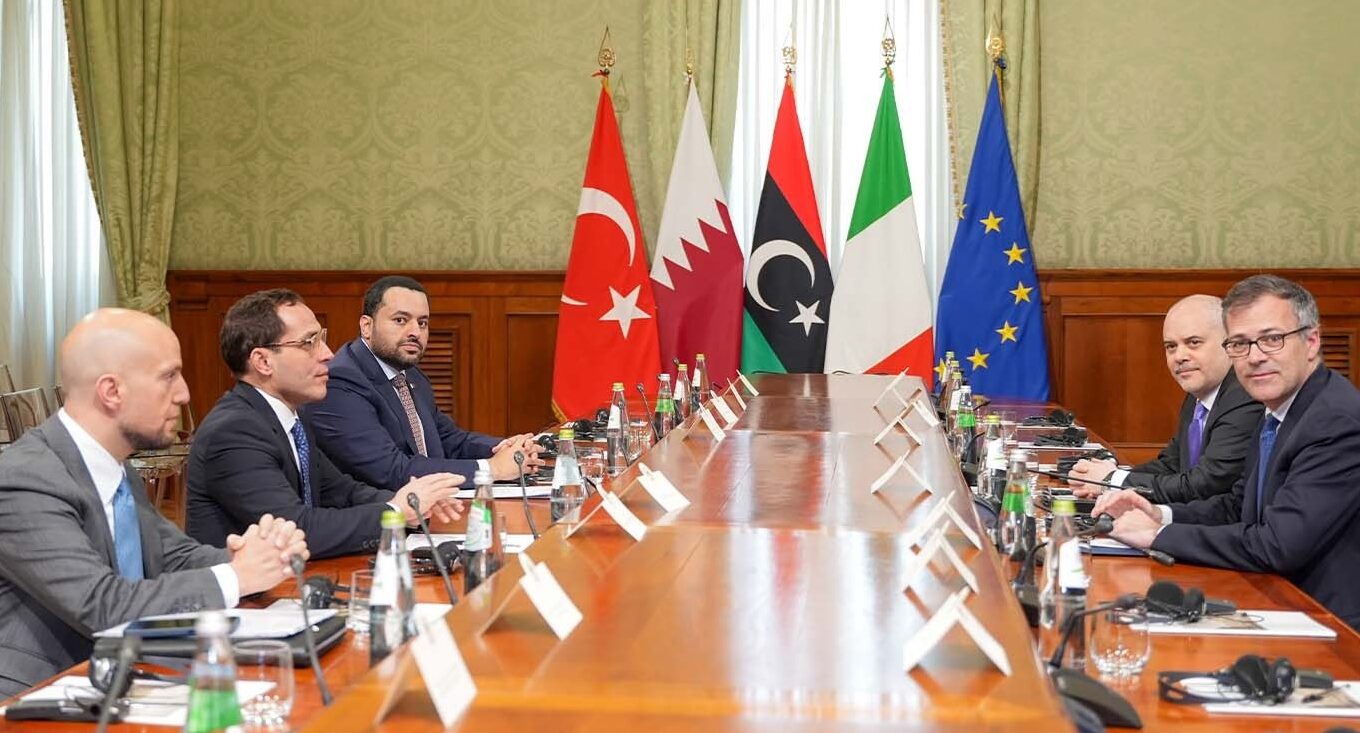
The government of Italy has hosted high-level talks with delegations from Libya, Turkey, and Qatar in Rome to discuss migration management, security cooperation, and ways to reduce irregular migration across the Mediterranean Sea.
The meeting brought together senior officials, including advisers to Italian Prime Minister Giorgia Meloni, along with representatives from Turkey and Qatar. The discussions focused on strengthening coordination between countries involved in migration routes that lead towards Europe, particularly through North Africa.
Libya remains a key transit country for migrants attempting to reach Europe, and Italy has continued to deepen cooperation with Libyan authorities despite the country’s ongoing political division. Rome mainly works with the internationally recognised Government of National Unity in Tripoli, while also engaging in limited security-related dialogue with eastern authorities.
Officials at the meeting discussed improving intelligence sharing, operational coordination, and institutional support aimed at reducing human trafficking and disrupting smuggling networks operating across the Mediterranean migration routes. Turkey and Qatar’s involvement was seen as part of broader efforts to expand regional cooperation and influence in migration and security policy.
Libyan representatives stressed that the country should not become a long-term destination for migrants or a permanent resettlement zone. They described irregular migration as both a security and humanitarian issue and called for stronger international partnerships to support Libya’s internal institutions, especially its defence and interior ministries.
They also pushed for expanded voluntary return programmes and economic development in countries of origin, arguing that migration pressures can only be reduced if root causes such as poverty, instability, and lack of opportunity are addressed.
At the same time, Libya continues to face strong criticism from human rights organisations over the treatment of migrants in detention centres and reports of harsh interception methods used by coast guard forces against boats in the Mediterranean. Authorities in Libya insist they are working to improve the system and strengthen their capacity to manage migration more effectively.
The talks also reflect a wider shift in European migration policy, as the European Union moves closer to approving “return hubs” outside its borders where rejected asylum seekers could be held while awaiting deportation. Several EU countries have already shown interest in similar arrangements with third countries such as Rwanda, Uganda, and Uzbekistan.
Supporters of the plan say it could help reduce irregular migration and improve deportation systems, while critics argue it raises legal and humanitarian concerns, especially regarding the rights of asylum seekers and the conditions in external processing centres.
The Rome meeting highlights Italy’s strategy of externalising migration control through partnerships with key transit and origin countries. However, the long-term effectiveness of this approach remains uncertain, as participating countries often have different priorities, ranging from security cooperation to political influence and economic interests.
As irregular migration continues to shape political debates across Europe, these types of multilateral agreements are likely to become more common, even as questions remain about their impact on human rights and whether they can significantly reduce migration flows across the Mediterranean.