
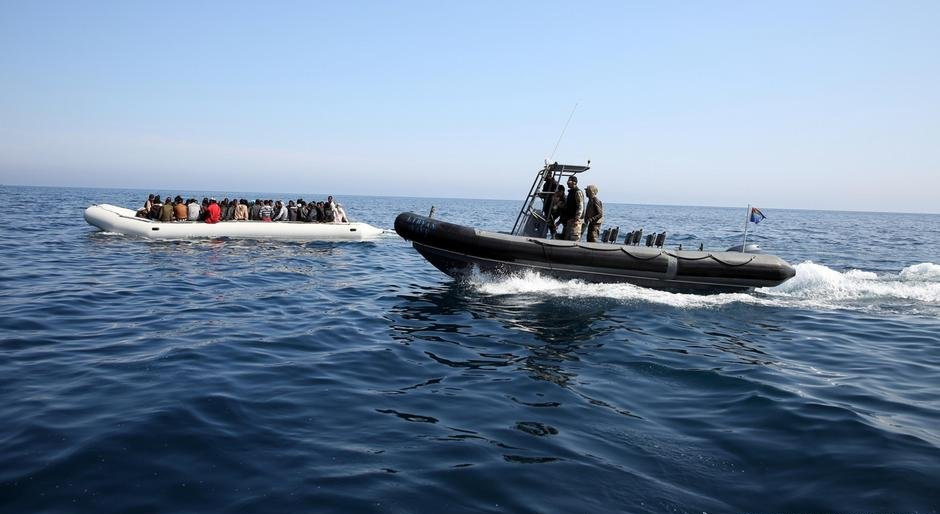
Authorities in Libya have shut down a clandestine factory in the Tajoura district near Tripoli that was allegedly being used to build and equip boats for migrant smuggling operations across the Mediterranean.
According to local media reports, forces from Libya’s anti-irregular migration unit and prosecutors from Tripoli’s immigration office carried out a raid on the facility after receiving intelligence about the operation. Officers reportedly arrested several suspects and seized industrial equipment and raw materials believed to have been used to construct vessels for unauthorized sea crossings.
The case has been referred to Libya’s Public Prosecution Office, which ordered the detention of suspects, confiscation of materials, and closure of the site while investigations continue.
The operation comes as authorities intensify efforts to disrupt migrant smuggling networks operating along Libya’s Mediterranean coast. However, analysts say tighter surveillance and EU-backed crackdowns in western Libya are pushing migrant routes toward eastern Libya, where monitoring remains weaker.
The International Organization for Migration has reported that thousands of migrants were intercepted at sea during the first months of 2026. As a result, many migrants and smuggling groups have reportedly shifted toward eastern departure points, especially around the city of Tobruk.
The so-called Tobruk route has become increasingly active in recent months, with more migrants arriving on the Greek island of Crete. The route has also seen rising numbers of deadly shipwrecks involving overcrowded and unsafe boats.
Migration researcher Tarek Lamloum said the growth of smuggling operations in eastern Libya has created a highly profitable underground economy. According to him, human trafficking and migrant smuggling networks have expanded significantly since 2019, when eastern Libya came under the control of forces linked to Khalifa Haftar.
Lamloum explained that migrants often enter eastern Libya through airports in cities like Benghazi before being moved toward coastal departure areas. Cities such as Tobruk and Derna, which were previously not major migration hubs, have now become important launching points for sea crossings to Europe.
He also claimed that armed groups controlling parts of eastern Libya are benefiting financially from the smuggling trade. According to Lamloum, the system has evolved into a coordinated network involving transport operators, landlords, and local businesses that profit from migrants passing through the region.
The smuggling industry reportedly includes both large wooden fishing boats fitted with communication systems and cheaper inflatable dinghies that carry far greater risks of capsizing. Crossing prices can range from under 1,000 US dollars for dangerous inflatable boats to several thousand dollars for more stable vessels.
Lamloum added that the financial rewards connected to migration have become deeply integrated into the local economy, making it difficult to dismantle the networks completely in the near future.
The developments highlight the growing challenges facing European and North African authorities as migrant routes continue to adapt to increased enforcement measures across the Mediterranean.