
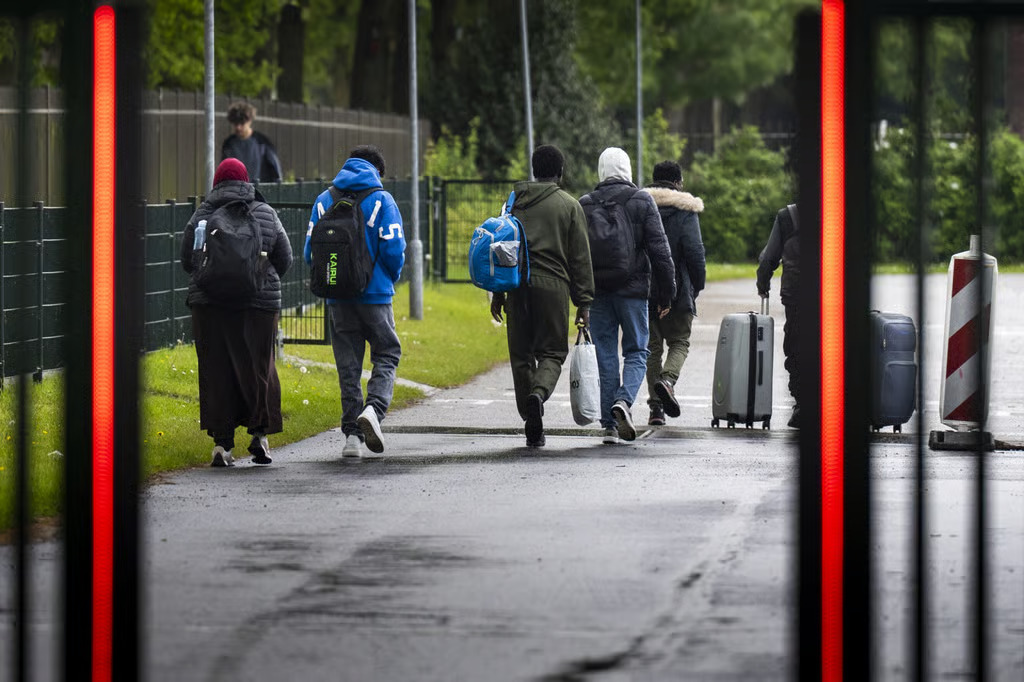
The government of the Netherlands has approved plans to establish migrant “return hubs” outside the European Union, marking a major step in Europe’s efforts to tighten migration policies and increase deportations of rejected asylum seekers.
According to reports, the Dutch government expects concrete progress on the plan within the coming months, with discussions already underway with several non-EU countries that could potentially host the facilities.
The proposed return hubs would allow migrants who have been denied the right to remain in the EU to be transferred to centres outside Europe while awaiting deportation or further immigration processing.
The Dutch government is also exploring the possibility of processing asylum applications outside the EU before migrants are allowed to enter Europe. Officials believe the system could help reduce irregular migration and prevent rejected asylum seekers from remaining within EU countries for long periods.
Bart van den Brink said European countries are increasingly seeking stronger migration control measures that are both practical and legally sustainable.
“Across Europe, people are asking for credible and workable solutions to regain control over migration,” van den Brink said. “Those solutions are increasingly taking shape and have been shown to be legally viable.”
The idea of return hubs became part of broader European migration reforms proposed by the European Commission last year amid pressure from several right-wing governments demanding stricter immigration controls.
Supporters argue that the centres would help address one of Europe’s biggest migration challenges — the difficulty of deporting migrants whose asylum claims have been rejected but who remain in EU countries because their countries of origin refuse to take them back or because deportation procedures are delayed.
The first return hub outside the EU is expected to involve cooperation between the Netherlands and other European countries including Greece, Germany, Austria, and Denmark, all of which have supported stronger migration enforcement policies.
Reports also suggest that the Netherlands is working with Denmark, Malta, and Sweden on plans to process asylum applications outside European territory.
Italy has already experimented with a similar arrangement involving Albania since 2023, although the programme has faced several legal challenges and criticism from human rights organisations.
The Dutch government recently informed parliament that a legal review conducted by the Clingendael Institute found no legal barriers preventing the creation of the return hubs or external asylum processing centres.
Although officials have not announced the location of the first hub, negotiations with possible host countries are reportedly continuing, and an agreement could be finalised within the next six or seven months.
Government officials said the focus is on building a legally durable system rather than creating political controversy around migration policy.
The push for return hubs comes as EU institutions continue negotiations on a new migration bill that would formally allow member states to establish such centres outside the bloc.
The legislation was expected to be approved earlier this month but has been delayed because of disagreements between EU institutions over parts of the proposal.
Migration remains one of the most politically sensitive issues across Europe, with governments facing growing pressure from voters concerned about border control, asylum systems, and irregular migration.
At the same time, human rights groups and refugee organisations have warned that offshore return hubs could expose migrants to poor conditions, weaken asylum protections, and increase the risk of human rights abuses.
European governments have struggled for years to reform migration laws, partly because of protections contained within the European Convention on Human Rights.
However, earlier this month, 46 member states of the Council of Europe called for migration rules to be interpreted in ways that allow governments to implement more effective migration policies.
The Dutch government’s latest move highlights the broader shift taking place across Europe, where countries are increasingly seeking external solutions to migration management as political pressure over immigration continues to rise.