
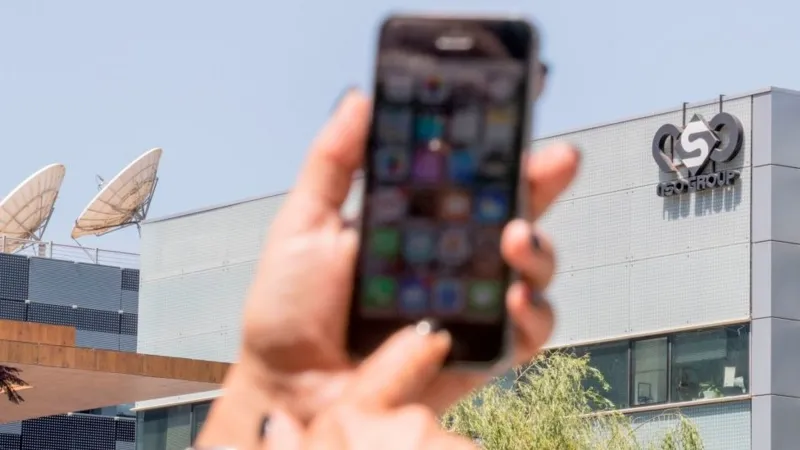
European border and migration authorities are increasingly using digital forensic technology developed by Israeli company Cellebrite to access and extract personal information from the mobile phones of migrants and asylum seekers. An investigation by Statewatch has raised concerns about privacy violations, inadequate legal safeguards and the growing use of surveillance technology in migration control.
Cellebrite markets its digital investigation products to law enforcement and border agencies as tools for tackling human trafficking, drug smuggling and irregular migration. Its flagship product, the Universal Forensic Extraction Device (UFED), allows authorities to access mobile phones and copy large amounts of stored information, including deleted messages and communications designed to disappear automatically.
The technology can also retrieve photographs, videos, contact lists, call records and location information, potentially giving authorities detailed insight into a person’s movements, relationships and migration journey.
Cellebrite has actively promoted its products to border authorities for several years. In 2019, Privacy International reported that the company demonstrated its phone extraction technology at the annual Border Security Congress. Its representatives explained how the system could unlock information stored on the phones of people crossing borders without identity documents.
The technology has since attracted interest from European migration officials. During a 2021 meeting organised under the Budapest Process, an EU-supported migration forum involving more than 50 governments in Eastern Europe and Asia, officials highlighted UFED as a useful tool for gathering information about migrants’ routes and journeys.
In Germany, authorities have expanded their legal powers to seize and examine the electronic devices of migrants facing deportation. The Repatriation Improvement Act, which came into force in February 2024, introduced provisions allowing officials to access personal devices, including mobile phones and computers, during deportation procedures.
The legislation extended powers that had already been available to Germany’s Federal Office for Migration and Refugees (BAMF) since 2017. Under the earlier provision, officials could examine personal devices to establish the identity and nationality of asylum seekers who lacked official documents.
However, the measures faced legal challenges. Germany’s Federal Administrative Court issued a critical ruling in 2023 concerning the privacy implications of accessing asylum seekers’ electronic devices.
Statewatch’s investigation also documented the experience of a Gambian man identified by the pseudonym Julika Simon to protect his identity. He arrived in Germany in 2018 after travelling through the Sahara Desert and Libya before crossing into Italy. His asylum application was rejected, but he remained in the country under a temporary tolerated status known as Duldung.
In November 2024, Simon attended an interview at a regional government office in Karlsruhe concerning his right to remain in Germany. During the meeting, officials asked him to hand over his mobile phone. When he refused to provide his passcode, police officers reportedly told him they would still find a way to unlock it.
Simon said he was given documents to sign without fully understanding their contents. He subsequently challenged the decision, securing a temporary suspension of the phone unlocking process. However, his device remained in government custody, while his appeal was still pending before the Federal Administrative Court at the time of Statewatch’s investigation.
Although it remains unclear whether Cellebrite technology was used against Simon, parliamentary records show that BAMF tested the company’s products in 2017. The actual extent of their use by the federal agency has not been made public.
Migration authorities in individual German states have also acquired Cellebrite systems. According to parliamentary inquiries and investigations by German media outlet Netzpolitik, Berlin’s migration authority has held licences for the technology since 2020, while Bavaria acquired the products in 2022.
Europol, the European Union’s law enforcement agency, has also maintained a relationship with Cellebrite dating back to the 2000s. Statewatch found that the agency began using UFED in joint investigations in 2010. By 2015, Europol had recorded 109 deployments of the technology.
The phone extraction systems have been used in investigations involving financial fraud, wildlife trafficking, child sexual abuse and migrant smuggling. Europol has also deployed specialist mobile teams equipped with the technology to assist national police forces.
In 2015, Europol joined Frontex and the European Union Agency for Asylum in implementing the controversial hotspot approach, designed to identify and register migrants arriving at Europe’s external borders, particularly in Greece and Italy.
Europol officers were responsible for additional security checks, including examining migrants’ personal information and comparing it with existing law enforcement databases. A European Commission document from that year indicated that Europol could provide national authorities with tools, including UFED, to extract information from mobile phones and other electronic devices.
A former senior Europol official told Statewatch that experience with Cellebrite technology was considered an advantage when recruiting personnel for deployment in migrant reception centres.
However, questions remain about the legal basis for Europol’s involvement in extracting migrants’ phone data. The agency is not independently authorised to initiate criminal investigations. A paper by the Italian desk of Eurojust, the EU’s criminal justice cooperation agency, described how Europol officers trained in UFED could be appointed as technical consultants by national police during security checks.
Former European Parliament member Sophie in ‘t Veld criticised the arrangement, arguing that Europol should not operate as an external consultant with access to highly sensitive personal information without a clear legal mandate.
Europol told Statewatch that its tools are used to support national law enforcement authorities and that their use is restricted to lawfully seized datasets. However, the agency did not provide a detailed explanation of how UFED has been used in migrant reception centres or what specific safeguards govern the extraction of personal information.
The European Data Protection Supervisor, the EU’s independent privacy watchdog, also raised concerns about the amount of information obtained through mobile phone extraction. According to the agency, a full examination of a device can produce far more information than an investigation requires, including sensitive information belonging to third parties.
The investigation also identified the use of phone extraction practices along the France-Italy border, particularly around Menton and Ventimiglia, where migrants frequently attempt to cross into France.
ANAFE, a French organisation supporting migrants at the border, said it had collected testimonies from people stopped by border police in Menton who were asked to unlock their phones. In some cases, migrants reported that their devices were connected to unidentified equipment and subsequently stopped functioning properly.
French authorities have also been criticised for routinely seizing mobile phones during administrative checks. Statewatch reported that several requests for information sent to French government departments and law enforcement agencies had not received responses by the time its investigation was published.
Beyond Germany and France, Switzerland is preparing to expand the examination of electronic devices belonging to asylum seekers through a government initiative known as Project ADAM.
The project, developed by the State Secretariat for Migration (SEM), involves examining mobile phones, laptops, cameras and other electronic devices to establish applicants’ identities, nationalities and migration routes.
A pilot programme initially involved two asylum centres, with plans to extend the process to other facilities. However, the expansion was postponed until the winter of 2026–2027.
Documents reviewed by Statewatch show that Swiss authorities intend to collect a wide range of information, including photographs, videos, contacts, addresses, messages, call records, social media profiles and geolocation data. The proposed examination could also include deleted information.
The Swiss authorities have maintained that the project complies with national data protection requirements. However, researchers have questioned how the information will be used, how asylum seekers will be informed of their rights and how private communications with lawyers, relatives and activists will be protected.
Other European countries have also explored similar measures. Denmark revised its Aliens Act in 2017 to allow access to asylum seekers’ electronic devices, reportedly using technology developed by Cellebrite competitor MSAB.
In the Netherlands, authorities have also examined the phones of migrants held in administrative detention and asylum seekers. However, the country’s highest administrative court ruled in 2025 that the practice violated privacy rights.
The introduction of the EU Pact on Migration and Asylum in June 2026 could create further opportunities for the use of digital forensic technology. The new framework allows national authorities, under specified conditions, to examine electronic devices belonging to asylum seekers when assessing their applications.
For companies such as Cellebrite and its competitors, the changing legal framework could expand the market for phone extraction and data analysis systems across Europe.
Statewatch’s investigation highlights growing concerns about the balance between border security and migrants’ fundamental rights, particularly the right to privacy and protection of personal information.