
The European Union’s border agency, Frontex, is facing renewed scrutiny over its continued operations in Greece following allegations that it has failed to act on repeated warnings about serious violations of migrants’ fundamental rights.
An investigation by Le Monde says Frontex’s Fundamental Rights Office (FRO) has documented numerous incidents involving the treatment of migrants in Greece, raising questions about why the agency has continued its mission despite internal concerns.
One of the incidents highlighted occurred in May 2025 near the Greek island of Samos, where a rubber dinghy carrying 43 migrants, including more than a dozen children, reportedly suffered engine failure while attempting to cross the Aegean Sea.
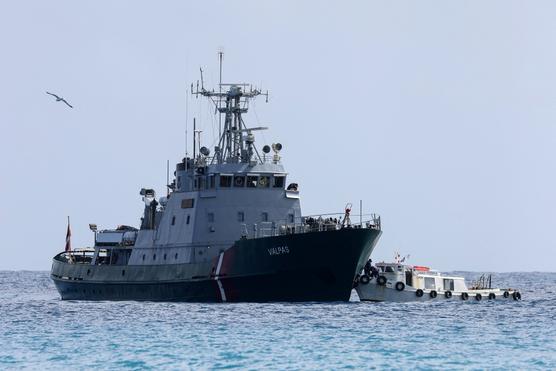
According to a Serious Incident Report prepared by the FRO, the migrants initially believed they had been rescued when a vessel approached. However, the report alleges they were instead intercepted by members of the Hellenic Coast Guard.
The report claims the migrants were taken aboard a Greek coast guard vessel, transported at sea for about two hours and later forced into inflatable life rafts after their belongings were confiscated. It further alleges that some officers involved were armed and wore black balaclavas during the operation.
The incident is described as an alleged “pushback,” a practice in which migrants are returned without being allowed to seek asylum. Such actions have been widely criticised by human rights organisations and may violate international refugee and human rights law if individuals are denied access to asylum procedures.
The investigation states that the Serious Incident Report was included in a March 2026 document obtained through a freedom of information request, adding to previous allegations concerning the treatment of migrants at Greece’s external borders.
The findings have renewed debate over Frontex’s oversight responsibilities and whether the agency should suspend or reconsider operations in areas where fundamental rights violations are repeatedly reported.
Greek authorities have previously denied carrying out illegal pushbacks, while Frontex has said it is committed to protecting fundamental rights and investigating credible allegations of misconduct.