
Nigeria has accused South Africa of failing to protect foreign nationals after two Nigerian citizens were killed amid growing anti-migrant sentiment in the country. The Nigerian government said the deaths occurred during a period when foreigners have increasingly become targets of hostility and violence.
In a statement issued by the Ministry of Foreign Affairs, Nigeria identified the victims as Emeka Charles Iroegbu and Musa Yunana Joe. The government said Iroegbu was reportedly killed on June 28 by officers of the Tshwane Metro Police Department in Pretoria during what it described as “gruesome interrogation techniques.” Joe, a Nigerian shop owner, was reportedly shot dead by unidentified attackers outside his business in the city of eMalahleni on the same day.
South African authorities have disputed parts of Nigeria’s account. Police said Iroegbu was arrested on suspicion of possessing drugs and collapsed while officers were handcuffing him. According to police, emergency medical services were called immediately, but he was declared dead at the scene. They insisted there is no evidence linking his death to the recent anti-migrant protests.
South Africa’s Independent Police Investigative Directorate (IPID), the body responsible for investigating police conduct, confirmed that it has opened an investigation into Iroegbu’s death. Officials said the inquiry is ongoing and that the circumstances surrounding the incident will be examined thoroughly.
In Joe’s case, South African police said he was approached by an armed suspect who opened fire before fleeing the scene. Authorities said investigations are continuing and that the motive for the attack has not yet been established.
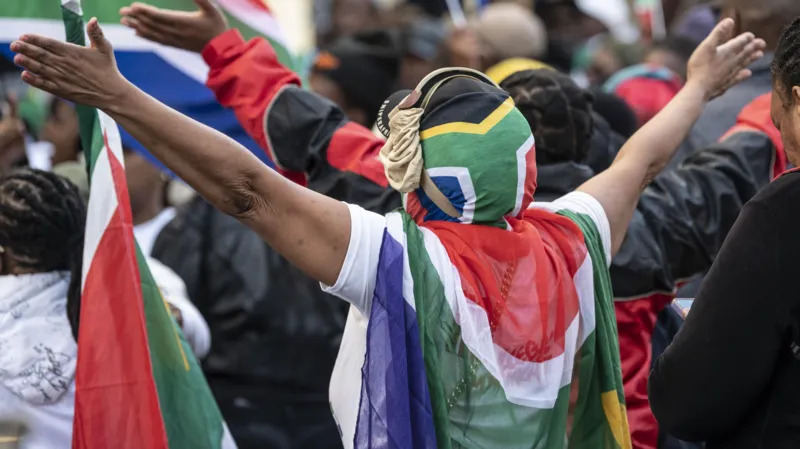
The deaths come as anti-migrant protests continue across South Africa. Demonstrators have demanded stricter action against illegal immigration, arguing that undocumented migrants are taking jobs and placing pressure on public services. In recent weeks, approximately 25,000 foreign nationals from several African countries have left South Africa, including around 700 Nigerians who were repatriated.
Nigeria has responded by placing the South African government “on notice,” warning that it could consider further diplomatic or legal action if attacks and hostility against foreign nationals continue. The government also announced plans to seek compensation for Nigerians who abandoned businesses, homes, and other property while fleeing the unrest.
Relations between the two countries have become more strained following remarks by South African Cabinet Minister Khumbudzo Ntshavheni. Speaking during a media briefing, she said South Africa would not compensate Nigerians who left the country and suggested that authorities would like information about alleged drug operations involving Nigerians. Nigeria strongly condemned the comments, describing them as “unacceptable,” “derogatory,” and a form of hate speech that unfairly generalized an entire nationality.
Nigeria’s Foreign Ministry also accused protest groups, including March on March and Operation Dudula, of promoting hostility and violence against other African nationals living in South Africa. Officials warned that individuals responsible for inciting violence could face legal action under regional or international law, although no specific legal steps have yet been announced.
Despite the growing diplomatic tension, South African authorities maintain that recent nationwide demonstrations have been largely peaceful, with only isolated incidents of violence. However, concerns remain over the safety of migrants as unemployment, economic challenges, and anti-immigrant sentiment continue to fuel tensions in Africa’s most industrialized economy.
Why is Nigeria criticizing South Africa?
Nigeria says two of its citizens were killed during a period of rising anti-migrant sentiment in South Africa. The government is demanding accountability, condemning what it describes as growing hostility toward foreigners, and seeking compensation for Nigerians who fled the country after abandoning their businesses and property.