
Thousands of migrants who crossed from Morocco into Spain’s North African enclave of Ceuta remain stranded more than a month after a mass arrival, with aid groups warning about poor living conditions, limited access to basic services, and safety concerns.
The situation has placed continued pressure on the small Spanish territory, where thousands of people are living in temporary accommodation, makeshift shelters or outdoors while they wait for authorities to determine what will happen to them.
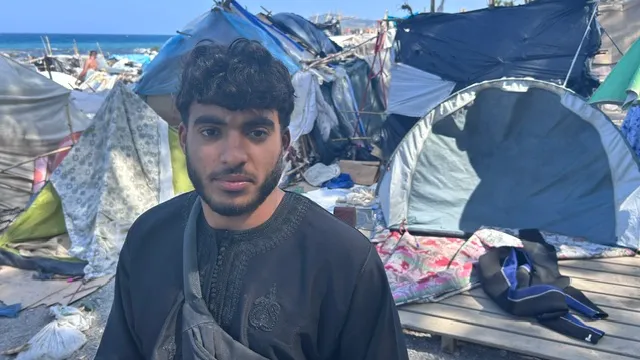
Among those still in Ceuta is 21-year-old Anis Fadi, a university graduate and qualified accountant who crossed from Morocco at the end of July. He said he spent hours swimming before reaching the Spanish territory, which he viewed as a possible route towards better employment opportunities in Europe.
Fadi is now living at Trampolin Beach, where many migrants have built temporary shelters using pieces of wood, branches and other materials they can find. He told Al Jazeera that he does not have a proper tent and has to rely on the makeshift structure for protection from the weather.
He also queues for food at a Red Cross distribution centre, sometimes waiting for hours.
The Spanish government estimates that between 6,000 and 10,000 people who crossed during the mass arrival remain in Ceuta. Local authorities have put the number considerably higher, estimating that about 13,000 people are still there.
The difference in estimates reflects the difficulty of determining the exact number of people remaining in the territory after the large-scale arrival in July.
Around 5,000 migrants, most of them women and children, have reportedly been provided with temporary accommodation. Many others continue to sleep outside, including at beaches and industrial areas.
Ceuta normally has a population of about 84,000 people. The sudden arrival of tens of thousands of people placed enormous pressure on the territory’s limited housing, health and humanitarian resources. Although many of those who entered have since returned to Morocco, authorities and aid organisations continue to face significant challenges in assisting those who remain.
A recently opened temporary shelter with space for about 1,700 people reached capacity within hours, according to the report, highlighting the shortage of accommodation available to the remaining migrants.
Fadi said he does not regret leaving Morocco despite the difficult conditions in Ceuta. He said he believed he had limited prospects at home and hoped that Europe would provide better opportunities for people with professional skills.
He also rejected descriptions of migrants as criminals, saying that he and others who made the journey were looking for employment and a different future.
The mass arrival has generated a political and social response in both Spain and Morocco. Anti-migration protests have taken place in Ceuta, while right-wing politicians and groups have described the influx in strongly critical terms.
At the same time, humanitarian organisations say the immediate concern is the welfare of the people who remain stranded.
Nolte Bauer of Mission Lifeline International said migrants living outside official accommodation faced problems including inadequate hygiene, limited medical assistance and concerns about violence, particularly at night.
The organisation has also received reports from migrants who allege that they were assaulted. Several people interviewed by Al Jazeera said they had been beaten by individuals they described as being in military or police uniforms.
Some of those interviewed showed injuries including cuts and bruising. One man, who spoke anonymously, alleged that he was attacked while sleeping and suffered injuries to his hands and knees.
These accounts have not been independently verified. Spanish authorities have rejected allegations of abuse and discrimination, saying police officers operate with respect for human rights.
Some migrants also told the news organisation that they were reluctant to seek treatment at hospitals because they feared that doing so could expose them to deportation or other immigration consequences. Aid organisations have consequently provided medical assistance to some injured migrants.
Doctors of the World and other humanitarian workers have been assisting people in areas where migrants are staying outside formal shelters.
The authorities say they are increasing accommodation and continuing to provide food and medical care while migrants are identified and their individual cases are processed.
The Spanish government has also said that people who do not have a legal basis to remain in Spain may be returned to Morocco, in accordance with the applicable procedures.
Ceuta’s authorities have repeatedly called on Spain’s central government and European institutions to provide additional assistance as the territory continues to deal with the consequences of the mass arrival.
For migrants such as Fadi, however, the immediate reality remains uncertainty. Many are living in temporary or makeshift shelters while waiting for decisions about their legal status and future.
With thousands still without permanent accommodation, humanitarian organisations and local authorities face continuing pressure to provide food, healthcare, shelter and protection while the immigration process moves forward.