
The Greek parliament has approved new legislation that will allow the country to transfer failed asylum seekers to migrant return hubs located outside the European Union, marking another step in Europe’s efforts to tighten migration controls.
The law follows the recent approval of an EU legal framework that permits member states to establish return hubs in third countries. While the European Union has provided the legal basis for the initiative, individual member states will be responsible for negotiating and operating the facilities.
Greek Migration Minister Thanos Plevris said Greece aims to reach agreements with partner countries before the end of 2026 so that the first return hubs can become operational in 2027. According to the minister, the Greek government has already held discussions with two African countries, although their identities have not been disclosed.
The new legislation is scheduled to take effect on June 12 and forms part of Greece’s broader strategy to reduce irregular migration and increase the return of individuals whose asylum applications have been rejected.
In recent months, Greece has also explored cooperation with several European countries, including the Netherlands, Denmark, Germany, and Austria, on the possibility of establishing joint return hubs. However, Greek authorities have temporarily paused bilateral discussions, indicating a preference for a coordinated European approach.
The proposal has generated concern among migrant rights organizations, which argue that offshore return centres could undermine asylum protections and limit access to fair asylum procedures. Critics warn that vulnerable migrants may face challenges in accessing legal support and protection if they are transferred outside the EU.
Greece has remained one of the main entry points into Europe for migrants and asylum seekers over the past decade. The country was heavily affected during the migration crisis of 2015 and 2016 when more than one million people arrived in Europe, many travelling through Greek territory.
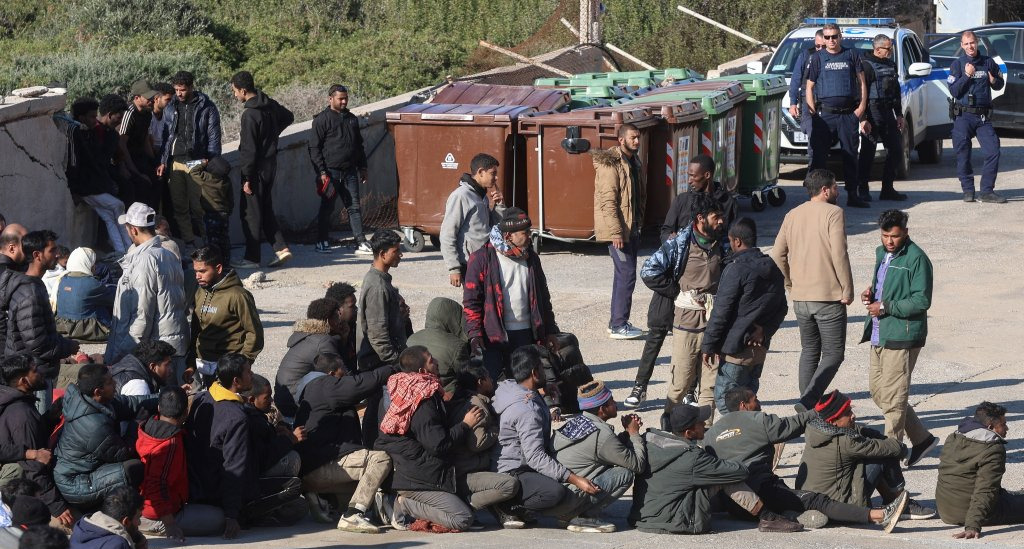
Although migration numbers are lower than during the peak years of the crisis, the islands of Crete and Gavdos continue to experience significant arrivals. The route from Libya to Crete has become increasingly popular among migrant smugglers and migrants seeking to reach Europe.
According to the Greek coast guard, at least 550 migrants arrived in Crete on four separate boats on June 9, including 42 minors. The latest arrivals have pushed the total number of irregular migrant arrivals in Greece this year to approximately 15,000, with around 6,000 reaching Crete alone.
Greek authorities continue to express concern about migration pressures from North Africa. Minister Plevris recently claimed that more than 500,000 migrants are currently in Libya waiting for opportunities to travel to Europe. Data from the International Organisation for Migration indicates that nearly 936,000 migrants are currently in Libya, with the majority lacking legal residency or work permits.
Officials have also reported an increase in boats departing from Libya toward Crete. Many of the recent arrivals are nationals of Bangladesh, Egypt, and Pakistan. Greek authorities generally classify these individuals as economic migrants rather than refugees fleeing conflict or persecution.
The sea journey from Libya to Crete covers approximately 300 kilometres and is considered one of the most dangerous migration routes in the Mediterranean. Smugglers are reported to charge migrants more than €3,000 for the crossing, despite the significant risks involved.
As Greece moves ahead with plans for return hubs, the debate over balancing border security, migration management, and the protection of asylum rights is expected to remain a major issue both nationally and across the European Union.