
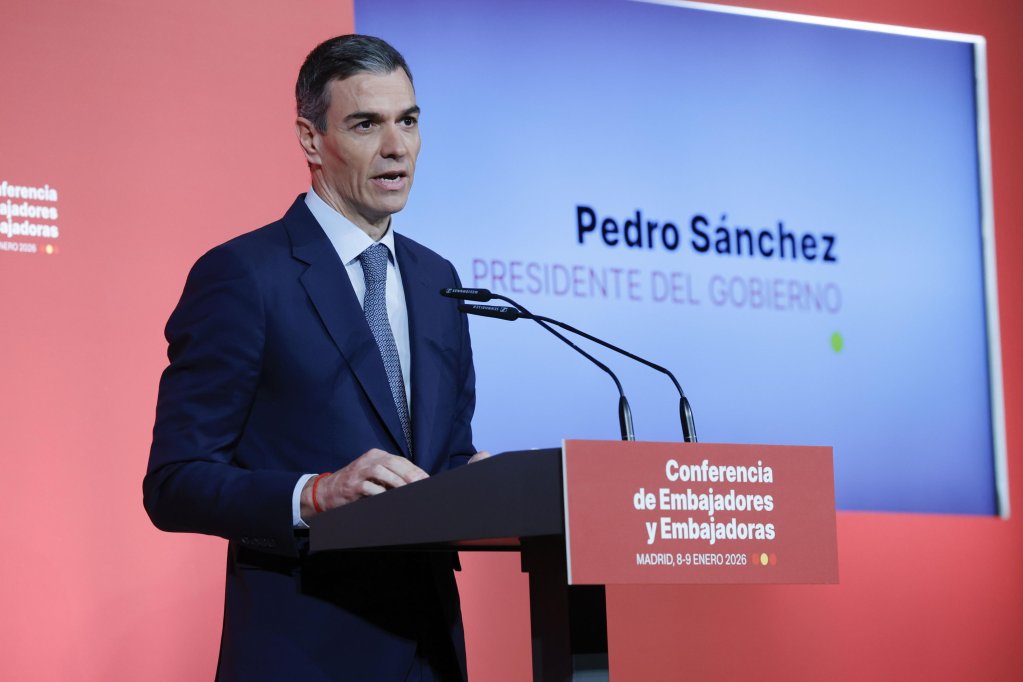
Spanish Prime Minister Pedro Sánchez continues to raise his international profile with outspoken positions on migration and foreign policy, even as his government faces mounting political pressure and corruption allegations at home.
Now in his eighth year in office, Sánchez has emerged as one of Europe’s most prominent advocates for migrant rights and international cooperation. He has also attracted global attention for his criticism of the policies of former U.S. President Donald Trump and his stance on major international conflicts, including the wars involving Israel and Ukraine.
His support for migration has distinguished Spain from several European countries that have adopted stricter immigration policies. Sánchez has repeatedly argued that migration can help address labour shortages, support economic growth, and offset the effects of an ageing population.
These positions have strengthened his international reputation, particularly among leaders who favour humanitarian approaches to migration and stronger multilateral cooperation.
However, the prime minister’s growing influence abroad contrasts sharply with the political challenges he faces within Spain.
His minority government continues to struggle with parliamentary gridlock, making it difficult to pass key legislation without the support of several smaller parties. At the same time, corruption allegations involving individuals linked to his governing Socialist Party have intensified political scrutiny and fuelled criticism from opposition parties.
The political environment has also become increasingly polarised, with debates over immigration, regional autonomy, and the economy deepening divisions across Spanish society.
Despite these difficulties, Sánchez has remained in office by building alliances with regional parties and benefiting from a fragmented opposition that has struggled to present a unified alternative government.
Political analysts say this strategy has enabled him to survive several political crises that might have brought down other administrations.
However, observers caution that Sánchez’s room for political manoeuvre is narrowing as Spain moves closer to its next general election. Continued parliamentary deadlock, public dissatisfaction, and the impact of corruption investigations could make it increasingly difficult for his government to maintain stability.
While Sánchez’s international standing remains strong, the coming months are expected to test whether he can translate that influence into sustained political support at home.
Why is Pedro Sánchez considered a pro-migration leader?
Pedro Sánchez has consistently supported policies that promote legal migration, migrant integration, and international cooperation. He argues that migration can help address labour shortages and demographic challenges while strengthening Spain’s economy, setting him apart from several European leaders who favour more restrictive immigration policies.