
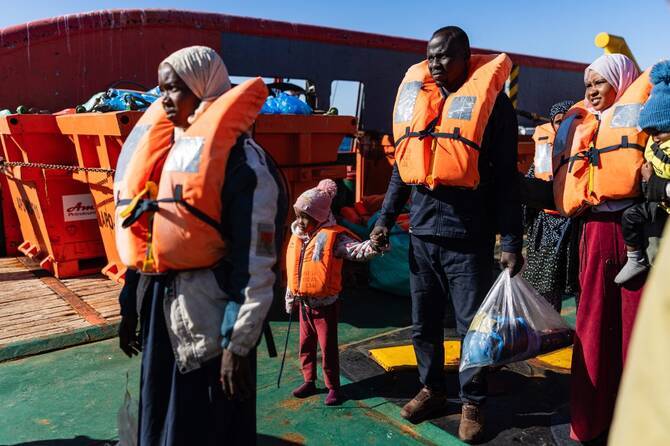
The European Union has proposed a new sanctions framework that would impose travel bans and asset freezes on individuals, groups, and organizations involved in migrant smuggling, human trafficking, and other forms of organized crime.
The proposal, unveiled by the European Commission, is designed to strengthen the EU’s efforts to disrupt criminal networks that profit from irregular migration while improving the protection of vulnerable migrants.
European Commission President Ursula von der Leyen said the initiative aims to dismantle smuggling operations that exploit people seeking safety or better economic opportunities.
“We all have a common goal: to drive them out of business and save the lives of thousands of people who dream of a better life,” von der Leyen said.
She added that the European Union should retain control over its migration policies, stating that Europe must decide who enters the bloc and under what conditions.
If adopted, the sanctions would allow the EU to freeze the financial assets of individuals and organizations linked to migrant smuggling and ban them from travelling within the European Union. Officials believe the measures would make it more difficult for criminal networks to finance and coordinate cross-border smuggling operations.
Before the sanctions can take effect, the proposal must receive unanimous approval from all EU member states in the European Council.
The announcement comes as migration remains one of the European Union’s most contentious political issues. Governments across the bloc continue to debate how to strengthen border security while meeting their international obligations to protect refugees and asylum seekers.
The proposed sanctions also follow the European Parliament’s recent approval of a broad migration reform package. The reforms seek to accelerate deportation procedures and allow the creation of offshore detention centres for certain migrants awaiting immigration decisions.
While supporters argue the reforms will improve migration management and discourage irregular migration, critics—including some EU member states such as France and Spain, as well as human rights organizations—have expressed concern that the measures could reduce protections for asylum seekers and make access to international protection more difficult.
The European Commission says the latest sanctions proposal complements broader efforts to tackle migrant smuggling by targeting the criminal groups that organize dangerous migration routes rather than the migrants themselves.
Why is the EU proposing sanctions against migrant smugglers?
The European Union wants to weaken criminal smuggling networks by freezing their assets and banning their members from travelling within the EU. Officials say the measures are intended to reduce irregular migration, combat human trafficking, and protect migrants from exploitation.